
Etosha National Park Wildlife Sanctuary To Namibia’s Great Safari
Etosha National Park is one of Namibia’s signature wilderness areas, a place where endless horizons, ancient salt flats, and thriving wildlife come together in a landscape that feels both timeless and deeply alive. As the natural gateway to northern Namibia and Ovamboland, Etosha seamlessly fits into almost every Namibian journey, offering travelers a rare chance to witness some of Africa’s most iconic species in a vast and peaceful setting.
Across this sweeping wilderness, you’ll encounter lions patrolling the plains, great elephant herds moving in silence, shy leopards resting in mopane trees, cheetahs scanning the savanna, and a rich mix of giraffe, hyena, eland, springbok, zebras, and countless other species. Etosha is, without doubt, Namibia’s premier wildlife sanctuary.
What Does “Etosha” Mean?
A Name Born From the Great White Pan
The word Etosha translates to “the great white area,” referring to the immense Etosha Salt Pan, the shimmering mineral flat that dominates the heart of the park. Stretching over 4,700 km², it is the largest salt pan in Africa and one of the continent’s most extraordinary natural features.
During the rainy months, sections of this great white basin briefly fill with water, drawing hundreds of thousands of flamingos and transforming the pan into a surreal pink and blue oasis. It’s one of southern Africa’s most captivating seasonal spectacles.
Get Close to Namibia’s Magnificent Wildlife
Quiet Moments, Floodlit Waterholes & Pure Wilderness
Etosha is uniquely designed for wildlife viewing. All major camps feature floodlit waterholes, allowing guests to safely watch wildlife long after sunset, a rare opportunity anywhere in Africa. Some camps even offer photographic hides, bringing you eye-level with elephants, antelope, and elusive nocturnal visitors.
The lodges and camps surrounding the park often include private decks or viewing verandas that overlook open plains or waterholes, giving you gentle, unhurried moments to connect with nature.
At Mtembezi Safaris, we keep our Etosha information always up to date and can help you arrange tailor-made accommodation, self-drive safaris, or fully guided experiences across this remarkable landscape.
A Landscape Like No Other
Why Etosha Leaves an Impression That Lasts a Lifetime: Seen from above, Etosha’s pale salt pan contrasts beautifully with the surrounding desert and mopane woodlands, a striking mosaic of whites, silvers, and soft earth tones. The mineral-rich soil supports a wide range of herbivores, while the sparse vegetation makes wildlife remarkably easy to spot throughout the year.
Etosha offers a unique safari experience found nowhere else in Africa. The open landscapes, the silence, the resilient wildlife, and the ever-changing colours of the pan combine to create a travel experience that stays with you long after you leave.
Etosha in the Wet Season | Namibia’s Wildest Transformation Caught on Camera
Wildlife You Can See in Etosha National Park
Etosha is one of Africa’s great natural theatres, and every game drive feels like stepping into a living documentary. As you travel across its white-dusted plains and sparse woodlands, you’ll encounter many of Namibia’s most iconic species. Elephant, giraffe, zebra, wildebeest and a wide range of antelope – including springbok, oryx, kudu and impala – form the core of Etosha’s wildlife sightings, often gathering in large numbers around the park’s famous waterholes.
Predators of Etosha
Lions are the star predators of the park and are most active at dawn, dusk, or during the cool hours of early morning. Leopard and cheetah also roam Etosha’s territories, though they tend to appear more quietly and unexpectedly, rewarding the patient safari lover with rare and unforgettable sightings.
One of the park’s interesting quirks is its zebra diversity. Etosha is home to both the common plains zebra and the much rarer Hartmann’s mountain zebra. The latter is specially adapted to rocky, mountainous habitats and is most often seen around western Etosha.
Birdlife in Etosha
For bird lovers, Etosha is a treasure chest. More than 340 species have been recorded here, a third of which are migratory. From the colourful European Bee-eater to 35 species of raptors, including vultures and eight owl species, there is always something to watch. Larger birds like the ostrich and the magnificent Kori Bustard – the world’s heaviest flying bird – are regularly seen striding across the plains.
No matter what you hope to find, Etosha offers one of Africa’s most rewarding wildlife experiences.
Can You See the Big Five in Etosha National Park?
Etosha offers four of the iconic Big Five: elephant, lion, leopard, and rhino. The only member absent here is the buffalo. If seeing the full Big Five is on your bucket list, you can easily combine Etosha with Namibia’s lush Zambezi Region, where buffalo thrive.
Big Five Highlights in Etosha
Etosha National Park is one of Africa’s few destinations where you can experience four of the iconic Big Five in a vast, open landscape shaped by ancient salt pans and wildlife-rich plains.
Elephants
Often seen gathering at the park’s natural and artificial waterholes, Etosha’s elephants are instantly recognisable by their pale, chalky coat, dusted white by the region’s mineral-rich soil. This striking appearance has earned them the fitting nickname “Ghosts of Etosha.”
Lions
Lions are frequently spotted resting under low mopane trees or quietly patrolling the grasslands. Their presence is a reminder of Etosha’s healthy predator population and the thriving ecosystem that supports them.
Black Rhinos
Etosha is one of the best places in Africa to see black rhinos in their natural habitat. The park protects one of the continent’s largest populations, making sightings both common and deeply meaningful.
Leopards
Though elusive and solitary, leopards do occur throughout the park. Spotting one is a rare privilege, often the highlight of any safari, and a testament to Etosha’s rich biodiversity.
Game Viewing in Etosha National Park
Game viewing in Etosha is consistently excellent. The open landscapes, strategic waterholes, and diverse habitats make wildlife sightings remarkably reliable.
The key to great sightings is simple, slow travel. Driving at 30–40 km/h allows you to follow tracks, notice movement in the bush, and spot both big wildlife and the smaller creatures that complete the ecosystem.
Waterholes are at the heart of Etosha’s safari rhythm. Whether you’re doing early morning or late afternoon drives, or simply waiting patiently at a midday waterhole, the wildlife comes to you.
Big Five & Wildlife Highlights in Etosha
Etosha National Park is one of Africa’s most iconic wildlife destinations, a place where animals gather around shimmering waterholes and the vast white salt pan sets the stage for unforgettable sightings. Here is what most visitors experience on a typical game drive:
- Elephants: Often seen at waterholes, their pale, ghost-white coats covered in Etosha’s mineral-rich dust, giving them the famous nickname.
- Giraffes: Graceful silhouettes moving through the acacia woodlands or bending delicately to drink.
- Rhinos: Both Black and White rhinos are present, with Etosha being one of the best places in Africa to see them in their natural habitat.
- Lions: Frequently spotted resting near thickets, lounging at waterholes, or patrolling the grasslands.
- Antelope Species: Springbok, Oryx, Kudu, Impala, and many others bring life to the plains.
- Cheetah or Leopard: Shy, elusive, and a special reward for the patient traveler.
Etosha is also a dream for photographers, expect crystal-clear skies, golden light, dramatic horizons, and wildlife framed against the stark beauty of the salt pan.
Seasonality – When Is the Best Time to Visit Etosha?
The beauty of Etosha is that it offers something exceptional throughout the year. Your experience simply changes with the seasons.
Dry Season (May – October)
Best for wildlife viewing
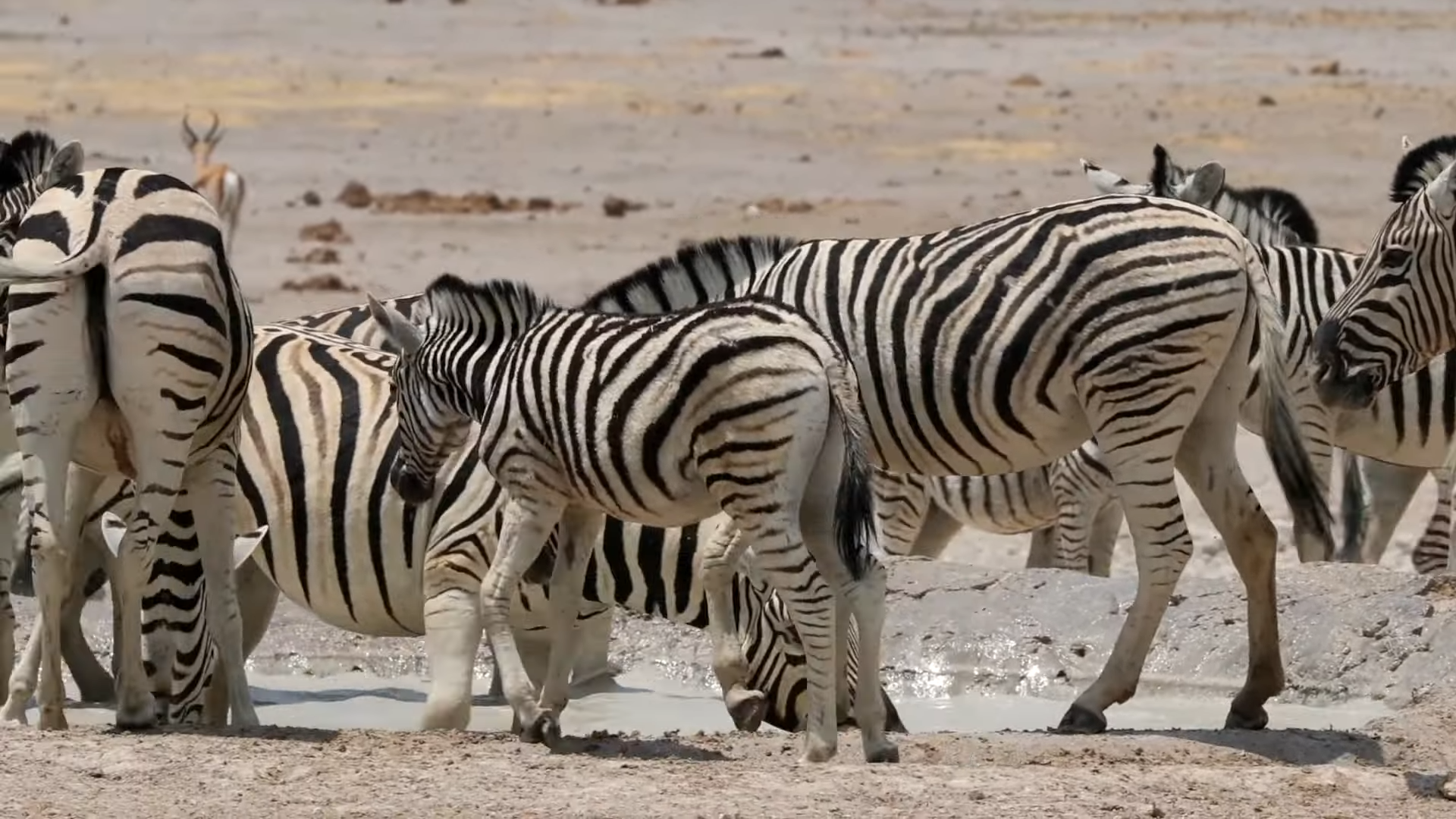
Zebras moving across the bright, arid plains of Etosha National Park_Mtembezi African Safaris
This is the classic safari season. Water sources dry up, causing animals to congregate around the permanent waterholes. Sightings of elephants, zebras, and predators are at their peak. Visibility is excellent thanks to sparse vegetation and clear skies.
Ideal for:
- First-time visitors
- Big cat sightings
- Longer game drives
- Predictable waterhole action
Green Season (November – April)
Best for photography and birding
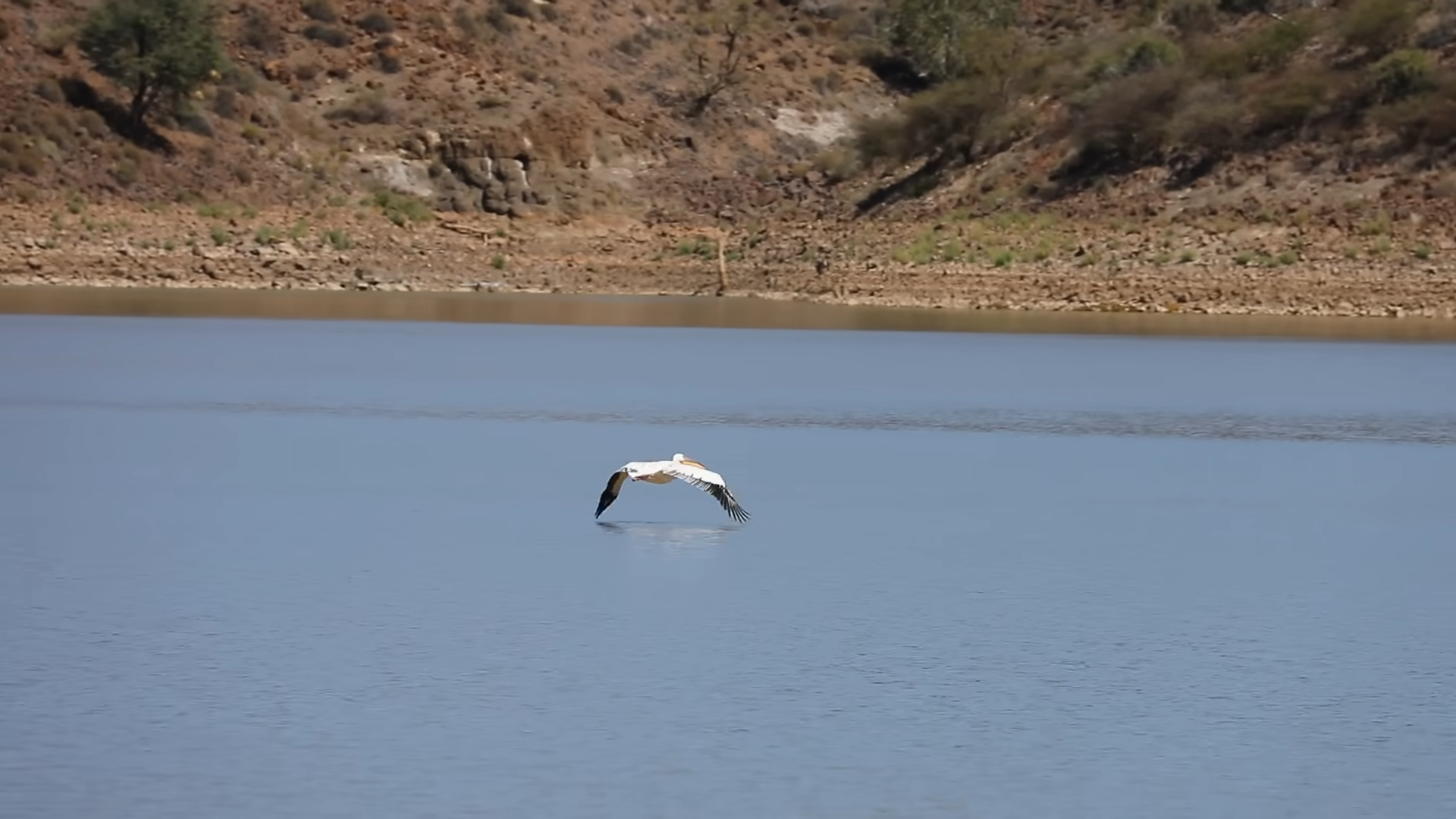
Birding Safari Experience in Namibia_Mtembezi African Safaris
With the arrival of the rains, Etosha transforms into a lush, green landscape. Wildlife spreads out, but the scenery becomes breathtaking. Migratory birds arrive, colours intensify, and dramatic skies create perfect photographic light.
Ideal for:
- Photographers
- Bird watchers
- Travellers seeking fewer crowds
- Those who enjoy dramatic colours and calm ambience
If it’s your first time visiting Etosha, we recommend the dry season from May to October.
Best Places to See Wildlife in Etosha National Park
Etosha’s wildlife thrives around its life-giving waterholes, and these are without question the best places to observe animals throughout the year. Every waterhole tells its own story. Wait patiently through the early morning light or settle in during the late afternoon, and you’ll witness the rhythm of Etosha unfold before you.
Some of the waterholes are floodlit at night, offering one of Africa’s rarest safari experiences, watching wildlife move silently through the darkness as they come to drink. Elephant, zebra, antelope, lions, hyenas, and even shy nocturnal animals share these spaces while birds soar overhead, creating a truly unforgettable scene.
These waterholes, fed by natural springs or man-made boreholes, act like magnets in the dry landscape. It’s not unusual to see elephants and antelope drinking only metres away from a resting lion, or giraffes approaching cautiously as jackals weave between the shadows.
Among the most well-known waterholes are: Nebrownii, Okaukuejo, Rietfontein, Goas, Kalkheuwel, and Namutoni
Each one offers a different atmosphere and a high chance of witnessing dramatic wildlife interactions.
Beyond the waterholes, Etosha offers other rich viewing areas. When the rainy season arrives, shallow water gathers across the vast Etosha Pan, luring thousands of flamingos and other migratory birds, an incredible spectacle against the white horizon.
The open grasslands are home to large herds of zebra, wildebeest, and springbok, while the thicker woodlands in the east and west offer prime territory for predators such as leopards. For those seeking a quieter, more exclusive safari, the western part of Etosha delivers beautifully. Here, sightings of the rare black rhino and the elusive Hartmann’s mountain zebra are more common, and the experience feels truly wild.
Practical Tips for Visiting Etosha National Park
Visiting Etosha is easy and incredibly rewarding when you know how to make the most of your time. Here are some essential tips to help shape an enjoyable and seamless safari.
Where to Stay in and Around Etosha National Park
You’ll find a handful of lodges and camps within Etosha’s boundaries, as well as numerous accommodation options just outside the gates. Lodges inside the park offer immediate access to wildlife viewing and the rare advantage of floodlit waterholes, where animals can be seen well after sunset.
Staying outside the park can be equally appealing. Many external lodges feel intimate and charming, with personal touches, excellent guiding, and peaceful settings. These properties often offer easier availability and a high level of comfort.
Some guest-favourite camps and lodges include:
- Ongava Lodge
- Onguma The Fort
- Hobatere Lodge
- Okonjima Plains Camp
- Onguma Bush Camp
- Etosha Safari Camp
- Mushara Bush Camp
Most of these accommodations offer amenities such as restaurants, swimming pools, fuel stations, and easy access to key wildlife routes. Their proximity to waterholes makes them ideal bases for both early-morning departures and relaxed mid-day wildlife watching.
Because Etosha is one of Namibia’s most popular destinations, advanced booking is essential, especially from May to October.
Self-Drive vs. Guided Safaris in Etosha National Park
Etosha is one of Africa’s most rewarding parks for both self-drive adventurers and travellers who prefer a fully guided safari. The park’s road network is well-maintained, signage is clear, and the landscapes are open, making wildlife viewing accessible whether you’re behind the wheel or relaxing in a safari vehicle.
Self-Drive Safaris
A self-drive safari gives you the freedom to explore Etosha at your own pace. While a 4×4 vehicle is not strictly required, we recommend it for additional comfort, especially on stretches of corrugated gravel. Distances between camps can be long, and services outside the main rest camps are limited, so you should always travel prepared.
If you choose to self-drive, remember to carry:
- Plenty of drinking water
- Extra fuel
- Snacks/light meals
- A paper map or an offline GPS
- Sunscreen and a hat
For independent travellers, the quiet roads and wide horizons create an unforgettable sense of freedom.
Guided Safaris
If you’d rather sit back and immerse yourself fully in the experience, a guided safari is the perfect fit. Our curated journeys are led by expert guides who know Etosha’s rhythms intimately. They understand animal behaviour, know which waterholes are active, and can interpret tracks, bird calls, and subtle signs that most guests would miss. With a guide, you simply relax, focus on photography, and let the wilderness unfold around you.
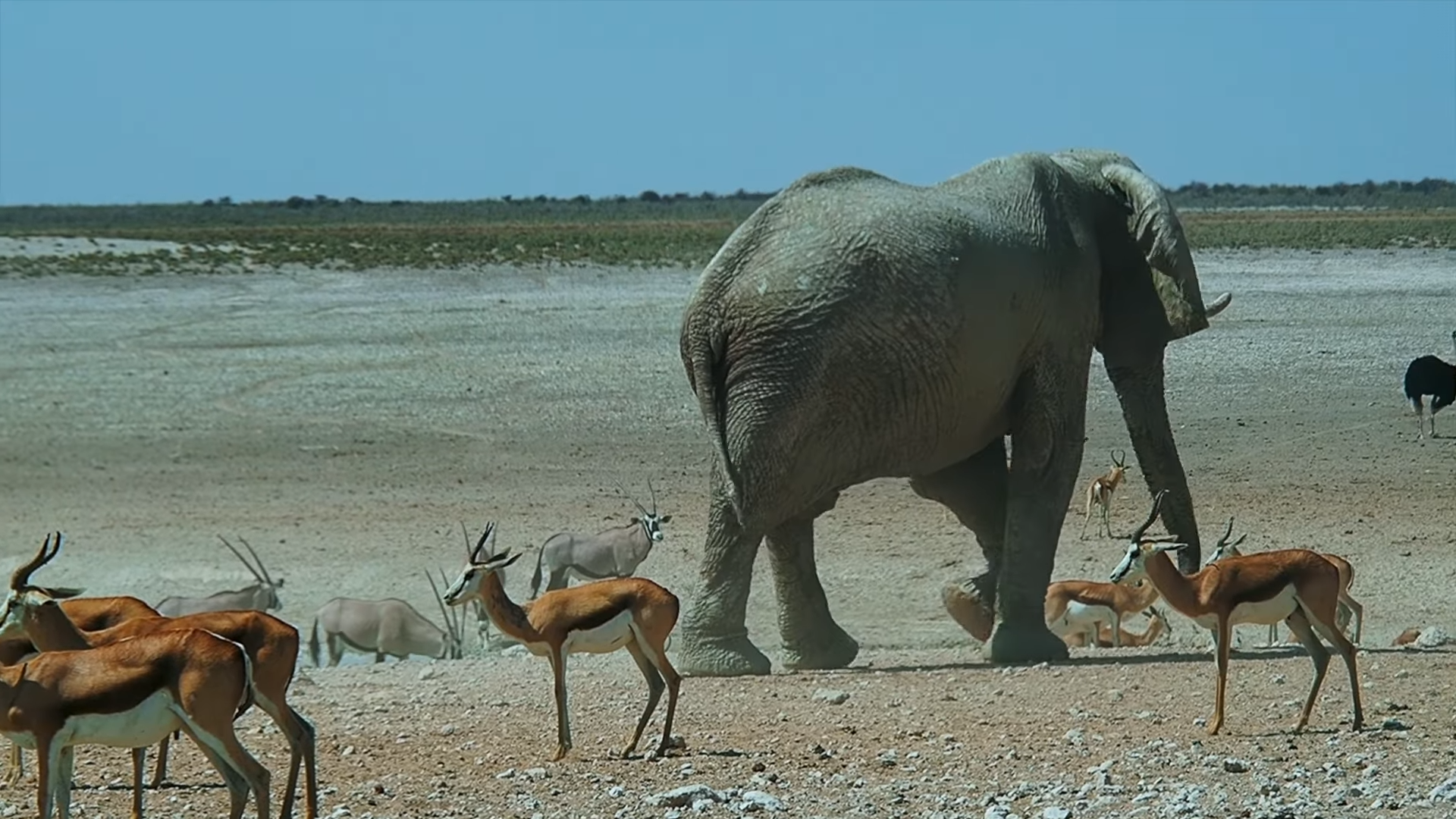
Etosha National Park Elephants and Lions
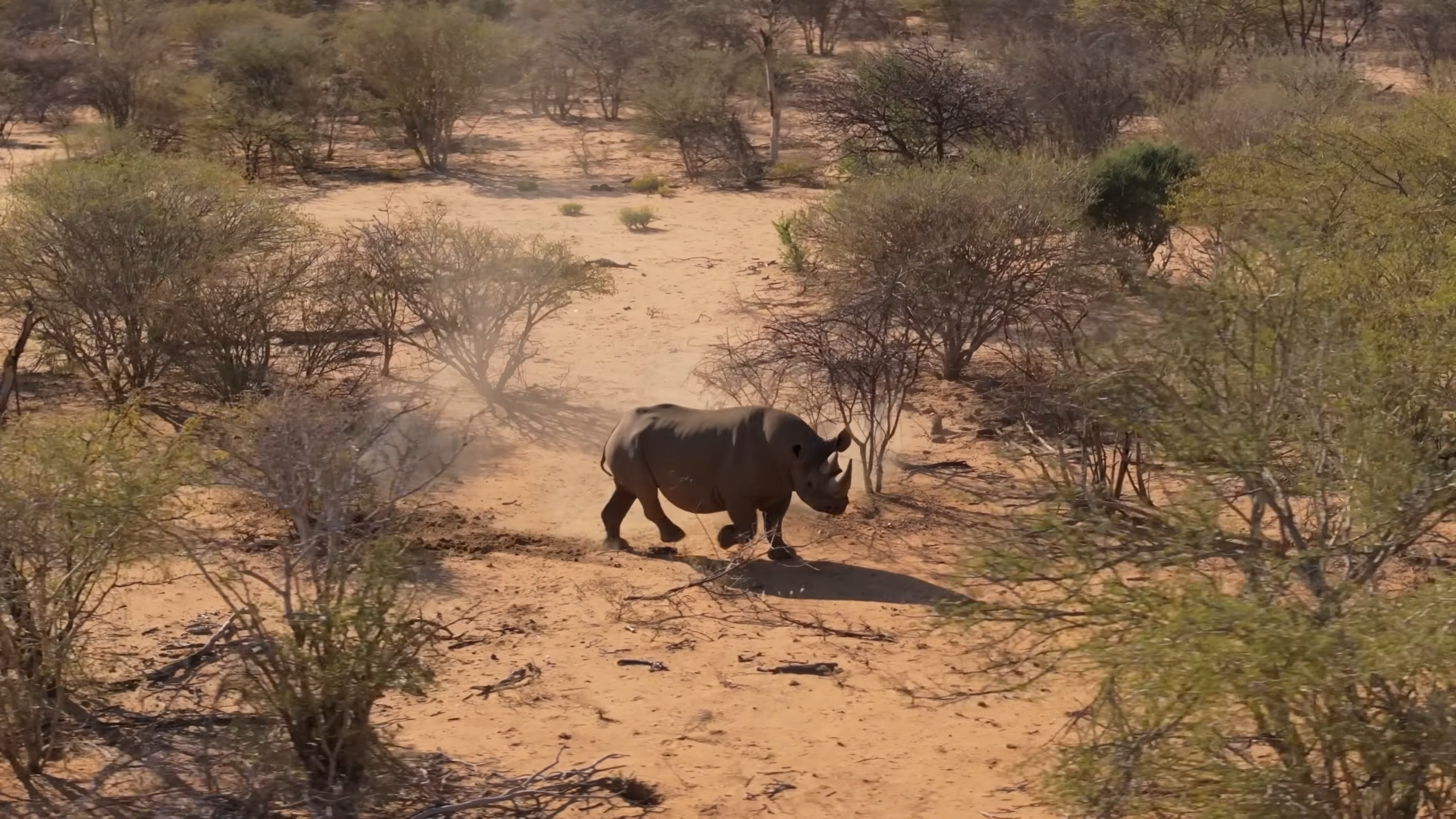
Black Rhino through vegetation in Etosha National Park during a safari drive_Mtembezi African Safaris
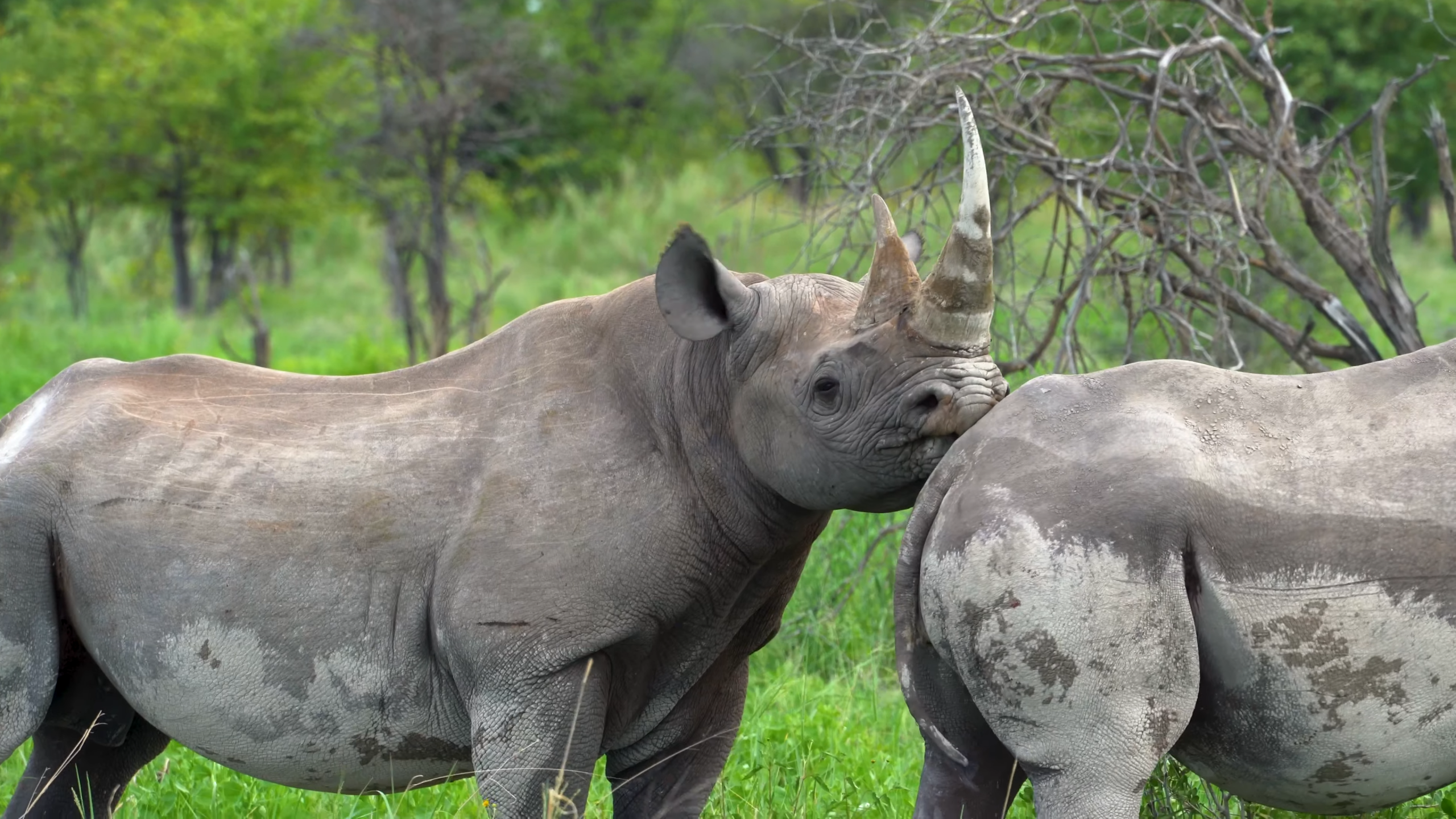
Black Rhino Tracking Safari Experience
Driving in Etosha National Park – What to Expect
Exploring Etosha by road is one of the most rewarding ways to experience the park’s vast landscapes and wildlife. A well-connected network of gravel roads links the three main rest camps, while smaller routes branch off toward more than 30 active waterholes, each one offering a chance to witness incredible animal behaviour throughout the day.
A Park with a Remarkable History
When Etosha was first proclaimed in the early 1900s, it covered a massive 100,000 km², making it the largest wildlife reserve on earth at the time. Over the years, political and community land negotiations reshaped its boundaries, and today Etosha spans 22,000 km² — still one of Africa’s most iconic protected areas.
The Three Main Rest Camps
- Namutoni: Located near the eastern gate, known for its historic fort and diverse waterholes.
- Halali: Centrally positioned, making it ideal for reaching many key wildlife routes.
- Okaukuejo: Famous for its floodlit waterhole, one of the best rhino-viewing spots in Africa.
All three camps have floodlit waterholes, allowing for magical night sightings, elephants, black rhinos, lions, hyenas, and more. Okaukuejo’s waterhole is particularly legendary, while Halali’s newer waterhole has quickly become a favourite among seasoned travellers.
Road Conditions & Driving Tips
Etosha’s gravel roads are generally well-maintained, but conditions can vary depending on traffic and weather. Here’s what every traveller should know:
- Gravel Roads: Regular grading keeps them drivable, but sharp stones can cause punctures.
- Tyre Pressure: Slightly deflating your tyres improves comfort and reduces wear on the road.
- Speed Limits: The recommended game-viewing speed is 40–50 km/h, slow enough for sightings and safe enough for wildlife crossings.
- Corrugation: Excessive speeding causes road corrugation, making the ride rough for everyone. Keeping to the limit helps preserve the park’s road network.
Before you set off, always check in with park reception for updated waterhole and road information. Wildlife movements change daily, and rangers often share helpful tips on the best areas to explore.
Take it Slow & Enjoy the Journey
Etosha rewards patience. Driving at a relaxed pace not only protects wildlife but gives you the best chance to spot elephants, lions, rhinos, and hidden gems like honey badgers or rare birds. It’s all part of the slow, immersive safari experience Etosha is known for.
Gate Times & Permits
Etosha’s gates open at sunrise and close at sunset, so planning your day around these times is essential, especially if you’re self-driving. Early mornings offer the best activity, with predators still on the move and cooler temperatures making animals more visible. Permits can be purchased at the entrance gates or the administrative offices within the camps. Keep your permit with you at all times during your visit.
If you are travelling on a guided safari, your guide will handle all logistics, permits, timing, and wildlife protocols. You simply enjoy the sights, sounds, and stillness of the bush.
Plan Your Etosha Adventure
Now that you know what Etosha is famous for, it’s time to plan a journey into one of Namibia’s most iconic landscapes. Whether you choose a self-drive adventure or a fully guided safari, we’re here to help you experience Etosha in the most meaningful and memorable way.
Speak to a Mtembezi Safari Specialist today and let us craft your perfect Etosha experience.