
The Savuti Safari Guide Experience: North Botswana’s Most Raw and Rugged Wilderness
Savuti Overview: Sense of Place, Wildlife Reality & Why Savuti Is Special
The Savuti safari experience begins long before the first animal sighting. It starts with distance, silence, and a growing awareness that Savuti is not designed for convenience. Located in the western sector of Chobe National Park, Savuti feels removed from the rest of northern Botswana, not only geographically but emotionally. The landscape opens slowly, with sandy two-track roads, dense mopane woodland, wide pans, and stretches of land where there are no vehicles, no buildings, and no signs of human presence.
Savuti is defined by its rawness. Unlike river-based safari areas where wildlife gathers predictably, Savuti operates on natural rhythms that change daily and seasonally. Animals move with water, grazing, and instinct. Some drives feel quiet, even empty, while others deliver sudden, unforgettable encounters. This unpredictability is not a flaw; it is Savuti’s greatest strength.
What makes Savuti special is that nothing is staged. Wildlife sightings feel earned rather than expected. The environment demands patience, awareness, and respect. Tracks in the sand often tell a deeper story than the animals themselves: lions that passed before dawn, elephants that crossed under the cover of night, or predators that melted back into the thickets moments before arrival.
The atmosphere in Savuti is immersive. Campsites are unfenced, and the boundary between wilderness and camp is deliberately thin. Night brings sound rather than silence, distant roaring, alarm calls, and movement in the darkness. This sense of exposure reconnects visitors with what a true wilderness safari is meant to feel like. Savuti does not perform for its guests; it allows them to witness it on its own terms.
For travelers seeking authenticity over volume, Savuti stands apart. It is a place where the landscape, not the itinerary, determines the experience. This is why Savuti continues to draw seasoned safari-goers, photographers, and overland travelers who value depth, atmosphere, and emotional connection over checklist tourism.
Savuti Game Drives: Predator Dynamics, Elephants & Seasonal Movement
Game drives in Savuti are shaped by movement rather than routine. There are no fixed circuits that guarantee sightings, and this is precisely why the Savuti safari experience feels so alive. Each drive is an exploration of possibilities, reading tracks, scanning open pans, and moving slowly through woodland where predators prefer to remain unseen.
Savuti is widely regarded as one of Botswana’s strongest predator regions, yet predators here are rarely stationary. Lions move between pans, marsh edges, and thickets depending on prey movement and temperature. Fresh tracks in the sand often appear where open plains meet dense vegetation, revealing how close predators may be without being visible. This creates an experience rooted in interpretation rather than spectacle.
Brown hyenas, a signature species of Savuti, reinforce this sense of unpredictability. Often nocturnal and elusive elsewhere, Savuti offers rare opportunities for daytime sightings, particularly along sandy access roads and near pans. Their presence reflects the healthy predator-scavenger balance that defines the region.
Elephants in Savuti operate on a scale that is difficult to grasp until witnessed firsthand. Herds move through the area in response to seasonal water availability, sometimes appearing absent for days before arriving in significant numbers. Open plains near pans can transform rapidly, filling with elephants moving between feeding and resting areas. These shifts emphasize how quickly the Savuti landscape can change.
Seasonal movement defines everything. After heavy rains, water spreads across pans and depressions, dispersing wildlife over vast areas. During drier periods, animal movement tightens, and game drives become more focused around remaining water sources. This dynamic ensures that no two days in Savuti feel the same, even when covering the same ground.
Savuti game drives reward those who slow down. Early mornings reveal tracks laid down overnight, while late afternoons often bring subtle changes in behavior as temperatures drop. Rather than chasing sightings, the most successful drives follow signs, tracks, alarm calls, and changes in bird activity that signal predators nearby. This is what makes Savuti extraordinary. It is not about density; it is about interaction. The landscape, the animals, and the observer are all participants in the experience. Savuti does not offer certainty, but it offers something far more valuable: authenticity.
Botswana Overland Safari | Khwai to Savuti, in the Okavango Delta | Episode 4
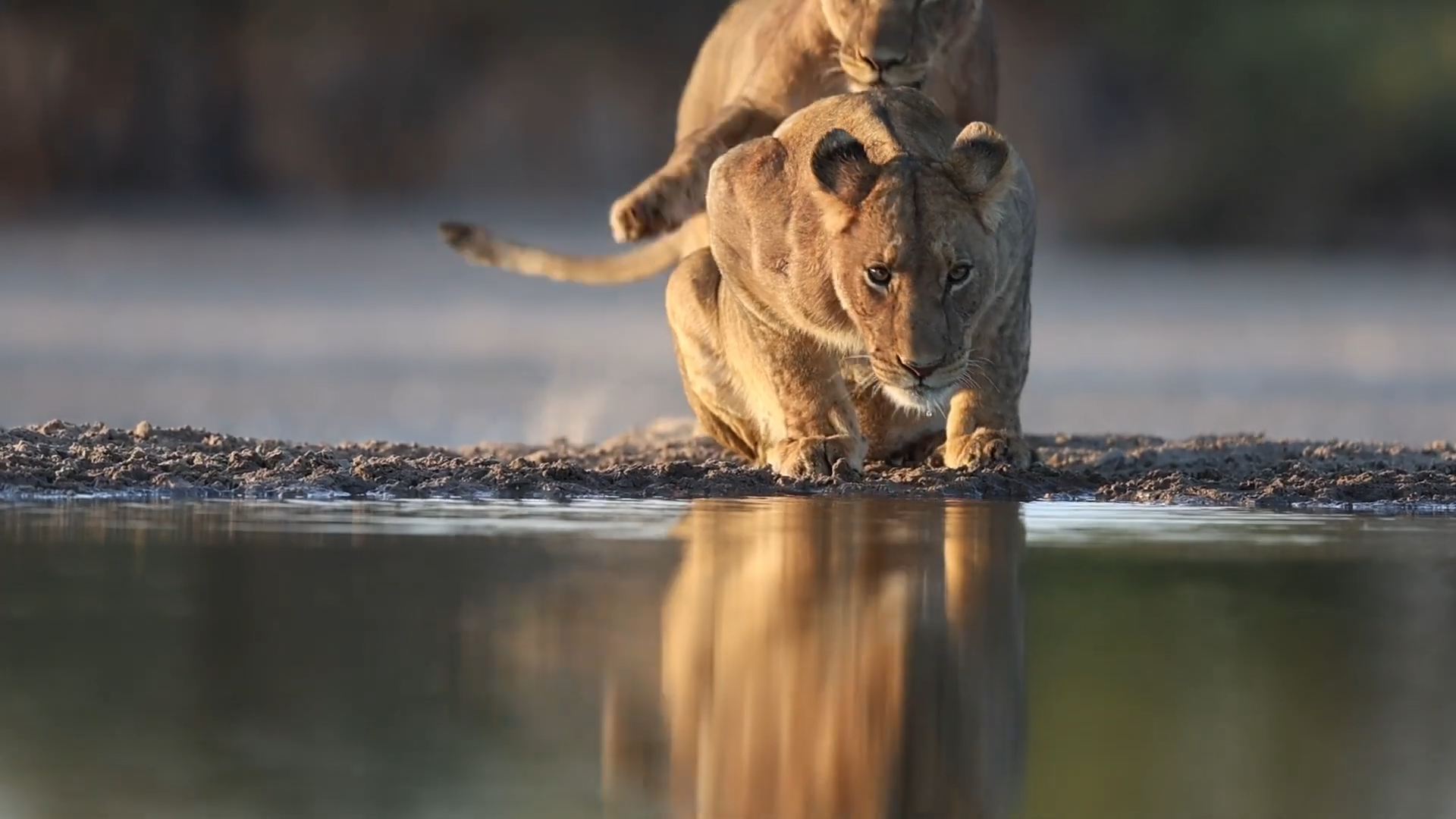
Wildlife Photography in Botswana_Lioness, one of the big five family
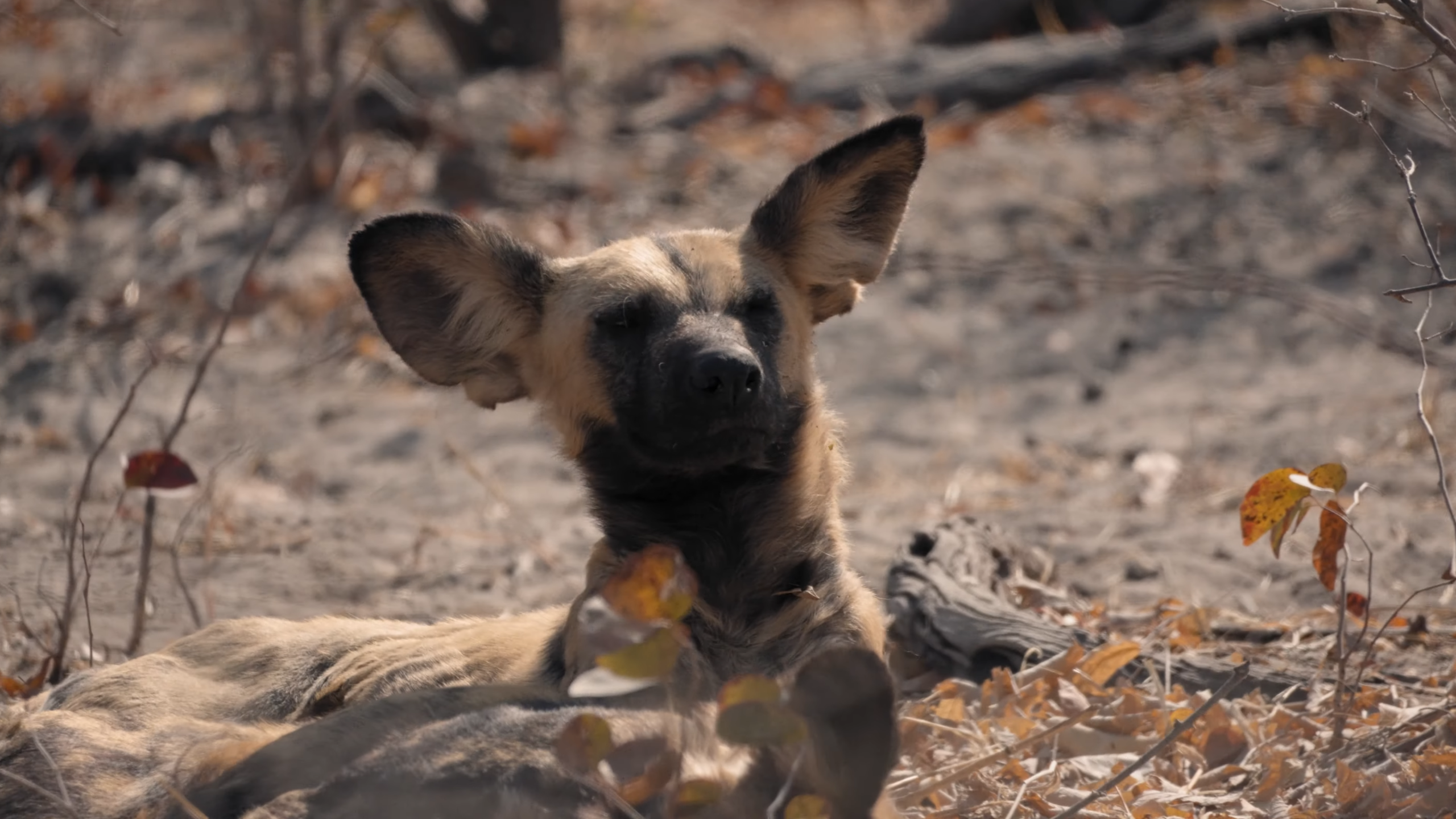
Wild Dog Tracking in Savuti, Chobe Safaris_Mtembezi African Safaris
Choosing the Right Route into Savuti
Accessing Savuti is part of the adventure, and the choice between the Savuti Marsh route and the Sand Ridge Road has a noticeable impact on the overall experience. Both routes are scenic and remote, but they differ significantly in terrain, driving effort, and wildlife potential.
The Savuti Marsh route is generally preferred when conditions allow. It offers broader visibility, firmer ground in places, and a greater chance of encountering wildlife moving between the marsh and surrounding plains. Seasonal grasses can grow tall, especially after rains, but the openness of the landscape often makes the drive more relaxed and visually rewarding.
The Sand Ridge Road is more demanding. Long stretches of deep Kalahari sand require consistent momentum, correct tire pressure, and patience. While wildlife sightings are less frequent along this route, the isolation reinforces Savuti’s wilderness character and prepares travelers mentally for what lies ahead.
Regardless of the route chosen, a well-prepared 4×4 vehicle, reliable navigation, and sufficient travel time are essential. Arriving later in the afternoon can reduce oncoming traffic and make the final approach into Savuti more comfortable.
Mtembezi African Safaris travel advice: Choose the Marsh route when conditions are suitable, lower tire pressures early, allow generous travel time, and treat the journey into Savuti as part of the safari itself.
| Feature | Savuti Marsh Route | Sand Ridge Road |
|---|---|---|
| Landscape Character | Open marshland, tall grasses, seasonal floodplains | Dry Kalahari sandveld, wooded ridges |
| Road Surface | Mixed terrain with firmer sections and occasional mud | Consistently deep, loose sand |
| Driving Difficulty | Moderate, highly seasonal | Demanding throughout |
| Best Time to Use | Dry season or shortly after water recedes | Year-round with correct vehicle setup |
| Wildlife Potential | Higher chances near marsh edges and pans | Lower density, occasional predator crossings |
| Physical Fatigue | Less tiring in good conditions | High due to prolonged sand driving |
| Navigation Importance | GPS strongly recommended | Navigation essential to avoid getting stuck |
Mtembezi African Safaris travel advice: When conditions allow, the Savuti Marsh route offers a more relaxed and scenic approach. The Sand Ridge Road should be chosen only with proper preparation and confidence in deep sand driving.
Explore birdlife, seasonal pans, and what photographers should realistically expect in Savuti
Savuti is often marketed for its predators, yet its birdlife and photographic potential are equally compelling,
especially for travelers who slow down and learn to read the landscape. Seasonal pans scattered throughout the
region create temporary ecosystems that attract a surprising diversity of species.
After good rains, shallow pans retain water long enough to support a range of waterbirds, including:
- Open-billed storks
- Spur-winged geese
- Comb ducks
- White-faced whistling ducks
- Lapwings and other waders
These birds are most active during early mornings and late afternoons, when light conditions are also at their
best for photography. Calm water surfaces, low-angle sunlight, and wide open backdrops create natural
compositions that are difficult to replicate elsewhere in northern Botswana.
Savuti’s pans are not permanent. Some dry quickly, while others retain moisture beneath the surface, continuing
to attract wildlife long after visible water disappears. This subtlety explains why bird activity may appear
suddenly in areas that looked empty just days before.
For photographers, Savuti demands adaptability. Sightings are rarely framed conveniently; animals move through
tall grass, dust, and woodland edges. This challenges photographers to work with atmosphere rather than
perfection. Dust clouds, silhouettes, and dramatic skies often become stronger storytelling elements than
tightly framed portraits.
Predator photography in Savuti is particularly rewarding for those comfortable with anticipation. Following
tracks, waiting patiently at pans, and responding to alarm calls often lead to fleeting but powerful moments.
These are not staged encounters, but real interactions unfolding at natural distances.
Savuti also offers exceptional opportunities for environmental photography. Wide plains, isolated trees, and
expansive skies provide scale and context, reinforcing how small wildlife and people are within this ecosystem.
Understanding expectations is key. Savuti does not promise constant action. What it offers instead is authentic
behavior, natural movement, and a sense of place that translates into images with depth and meaning rather than
volume.
Best Time to Visit Savuti: Seasonality and Data-Backed Insights
The best time to visit Savuti depends less on calendar months and more on how wildlife responds to rainfall patterns, water availability, and temperature. Savuti is a seasonal ecosystem, and understanding these shifts is essential to setting realistic safari expectations.
Dry Season (May to October)
This period is widely regarded as the prime time for a Savuti safari experience. Rainfall is minimal, temperatures are cooler in the early mornings, and surface water becomes limited. As a result, wildlife movement tightens around remaining water sources, pans, and the Savuti Marsh.
From June to September, predator sightings increase as prey becomes more concentrated. Lions, hyenas, and leopards are more frequently encountered along open plains and near pan edges. Elephants also move in large numbers through Savuti during this time, particularly as herds transition between feeding areas.
Visibility is at its best due to shorter grass and reduced foliage. These conditions support both game viewing and photography, making the dry season ideal for first-time visitors and wildlife-focused travelers.
Green Season (November to April)
The green season transforms Savuti into a dramatically different landscape. Rainfall replenishes pans, grass grows quickly, and wildlife disperses over wider areas. While game viewing becomes less predictable, this season offers exceptional scenery, birdlife, and dramatic skies.
From December to March, Savuti supports large numbers of migratory birds, making this the best period for birding safaris. Predator sightings still occur, but they are more track-led and require patience.
April marks a transitional phase where roads may still be soft, but wildlife movement begins to concentrate again as water slowly recedes. For experienced safari travelers, this shoulder period offers a balance between atmosphere and sightings.
Rather than a single “best” time, Savuti rewards travelers who align their expectations with seasonal behavior. Each season reveals a different side of the ecosystem.
What Travelers Should Know Before Staying in Savuti
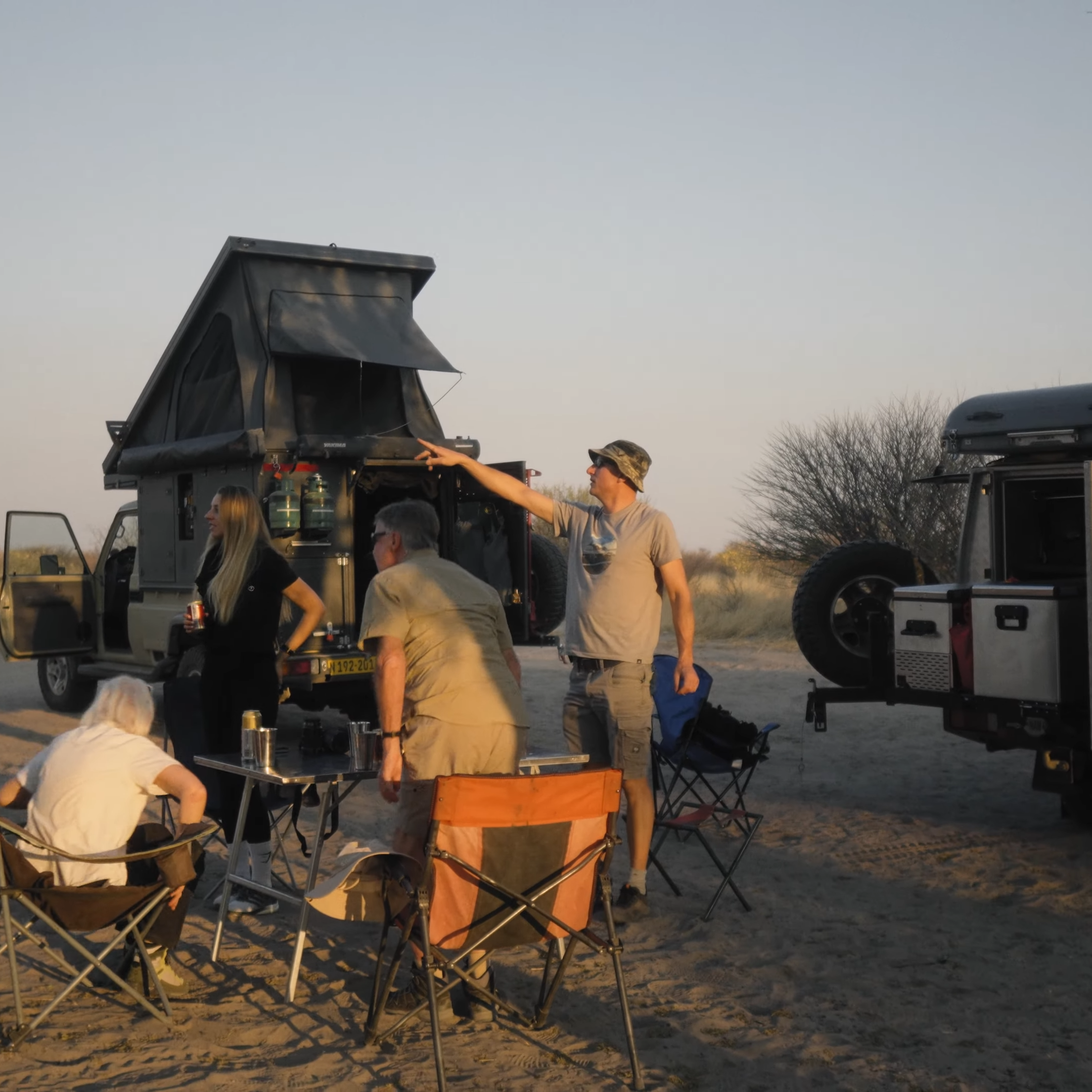
Savuti is not a casual camping destination. Campsites are unfenced, wildlife moves freely through camp, and the environment demands awareness at all times. Elephants, hyenas, and occasionally lions pass through without warning, particularly at night and early morning.
Self-drive travelers value Savuti for its independence and immersion. However, this style of safari requires confidence in sand driving, navigation skills, and a fully equipped vehicle. Tire pressure management, fuel planning, and contingency supplies are essential for a safe and rewarding experience.
Guided safaris offer a different advantage. Professional guides understand Savuti’s seasonal movement patterns, predator behavior, and road conditions. This allows guests to focus on the experience rather than logistics, often resulting in deeper wildlife interpretation and safer navigation through challenging areas.
Both options are valid, and the choice depends on experience level, time available, and comfort preferences. Savuti rewards preparation more than bravado, regardless of how one chooses to explore it.
Mtembezi African Safaris travel advice: Choose self-drive only if you are well prepared, consider guided safaris for deeper insight and safety, and always respect Savuti’s wildlife-first environment.
How Mtembezi African Safaris Curates Savuti Experiences
At Mtembezi African Safaris, Savuti is never treated as a standalone stop. It is positioned as a key wilderness chapter within a broader northern Botswana journey that respects pacing, seasonality, and traveler profile.
Savuti itineraries are curated based on:
- Time of year and rainfall patterns
- Client experience level (first-time vs seasoned safari travelers)
- Preferred travel style (camping, mobile safari, or lodge-based)
- Wildlife priorities (predators, photography, birding, or general game)
Rather than promising guaranteed sightings, Mtembezi African Safaris designs Savuti experiences around probability, preparation, and realism. Route selection, arrival timing, and camp positioning are all aligned to maximize authentic encounters while maintaining safety and comfort.
For self-drive clients, planning support includes:
- Route advice and timing strategies
- Vehicle and equipment recommendations
- Seasonal risk assessment
For guided safaris, Savuti is paired thoughtfully with regions such as Khwai and Moremi, allowing wildlife density to increase progressively while preserving Savuti’s raw appeal. Above all, Mtembezi African Safaris approaches Savuti with respect. The aim is not to dominate the landscape, but to move through it with understanding. This philosophy results in journeys that feel meaningful, grounded, and true to what Savuti represents.