
Gorilla and Chimpanzee Trekking from South Africa: Explore East Africa’s Primate Kingdom
Primate tracking from South Africa is more than a safari; it’s a journey into the beating heart of Africa’s last remaining untouched wilderness. While the traditional African safari often revolves around spotting the Big Five on the golden plains of the Kruger, Serengeti, or Maasai Mara, those seeking a deeper, more soulful wildlife encounter must look north, to the misty montane forests of East Africa.
Here, in Uganda and Rwanda, the rhythm of the rainforest reveals a different kind of magic. Trekking through tangled vines and ancient fig trees, travelers encounter our closest relatives, mountain gorillas, chimpanzees, and golden monkeys, in their natural sanctuaries. Gorilla and chimpanzee trekking from South Africa offers not just wildlife photography opportunities, but an emotional, once-in-a-lifetime communion with creatures that share over 98% of our DNA.
For discerning travelers from South Africa, Europe, North America, and the Asia-Pacific region, East Africa primate safaris represent the pinnacle of the African wildlife experience, blending the adventure of remote exploration with the reward of rare intimacy. From the jungle-cloaked slopes of Bwindi to the volcanic ridges of Volcanoes National Park, every trek is a humbling reminder of our shared connection to the wild.
Whether you’re beginning your journey in Johannesburg, Cape Town, Sydney, London, or New York, our expertly crafted African wildlife safaris from South Africa make it easy to connect seamlessly to Rwanda or Uganda. With direct flights, seasoned guides, and ethical conservation practices, Mtembezi ensures your primate tracking from South Africa becomes not just a trip, but a life-altering adventure.
Why East Africa Is The Global Primate Nexus
East Africa is the world’s epicenter of primate diversity, home to the last surviving populations of mountain gorillas, eastern chimpanzees, and golden monkeys, species found nowhere else on Earth. For travelers passionate about wildlife conservation and authentic exploration, East Africa primate safaris offer the most immersive and ethically responsible way to encounter these endangered species in their natural habitats.
This region’s success story is not an accident; it’s the result of decades of focused protection and responsible tourism. Every gorilla permit purchased directly contributes to park management, ranger patrols, and community development. In both Uganda and Rwanda, tourism has become a conservation lifeline: mountain gorilla numbers have risen from the brink of extinction to over 1,000 individuals, thanks to rigorous monitoring and the reinvestment of tourism revenue.
Rwanda, through its Volcanoes National Park, channels 10% of all tourism income into local community initiatives, building schools, clinics, and infrastructure for families living near gorilla habitats. In Uganda, Bwindi Impenetrable National Park and Mgahinga Gorilla National Park protect roughly half of the world’s remaining mountain gorillas, making Uganda a true powerhouse for gorilla trekking from South Africa and beyond.
For global travelers, the region’s appeal goes beyond its biodiversity. The landscapes themselves, from the mist-shrouded Virunga volcanoes to the emerald canopies of Kibale, create an atmosphere of awe and reverence. Few experiences in the world match the thrill of standing just meters away from a silverback gorilla in its family circle, or hearing the haunting calls of chimpanzees echo through the rainforest.
In every sense, East Africa is not just a destination; it is a pilgrimage for the conscious traveler, a place where conservation, adventure, and emotional connection converge. Whether you’re joining from South Africa, Europe, the USA, Asia, or Australia, your primate tracking journey from South Africa begins here — in the beating green heart of the continent.
The Mountain Gorilla Miracle
When travelers dream of primate tracking from South Africa, it’s the mountain gorilla that captures the imagination most vividly. Found only in the mist-cloaked forests of Uganda, Rwanda, and the Democratic Republic of Congo, these gentle giants embody the soul of East Africa’s wilderness.
Once on the brink of extinction, mountain gorillas have made one of conservation’s greatest comebacks, a living miracle achieved through decades of protection, research, and tourism-funded preservation. Today, their population stands at just over 1,000 individuals, thriving in two key strongholds: Uganda’s Bwindi Impenetrable National Park and the Virunga–Volcanoes Conservation Area, which is shared between Uganda and Rwanda.
In Uganda, roughly half of the global population is sheltered within Bwindi and neighboring Mgahinga Gorilla National Park, offering one of the most immersive East African primate safaris available. Across the border, Rwanda’s Volcanoes National Park safeguards more than 20 habituated gorilla families, making it the ideal choice for those seeking a shorter, luxury-style Rwanda gorilla trekking tour from South Africa or abroad.
What sets these encounters apart is their intimacy. Trekking through dripping ferns and tangled vines, you suddenly find yourself face-to-face with a silverback, his calm gaze filled with an intelligence that feels almost human. The forest quiets, and for one sacred hour, known as the “Golden Hour,” you share space with one of Earth’s rarest creatures.
Beyond the emotion, there’s purpose. Every gorilla trekking permit purchased funds park rangers, anti-poaching patrols, and community programs. In Rwanda, 10% of tourism revenue goes directly into local development, schools, health centers, and water systems for families living near the parks. In Uganda, the same model sustains both wildlife and livelihoods, ensuring that local communities benefit from protecting the gorillas rather than exploiting the forests.
For travelers seeking meaning in their adventures, primate tracking from South Africa is more than sightseeing; it’s a direct act of conservation, helping sustain one of Africa’s greatest wildlife success stories.
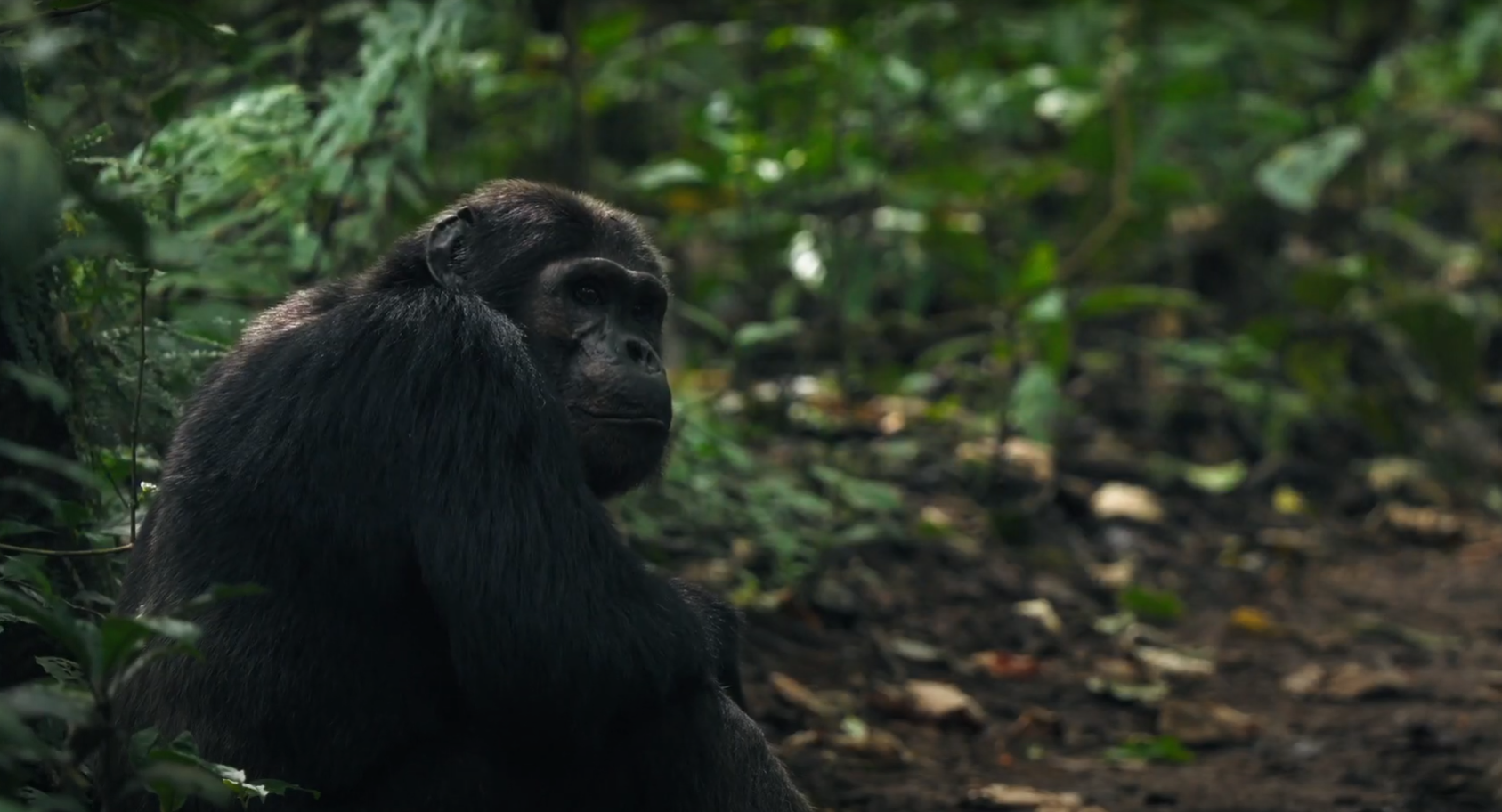
Nyungwe National Park Chimp Tracking Experience
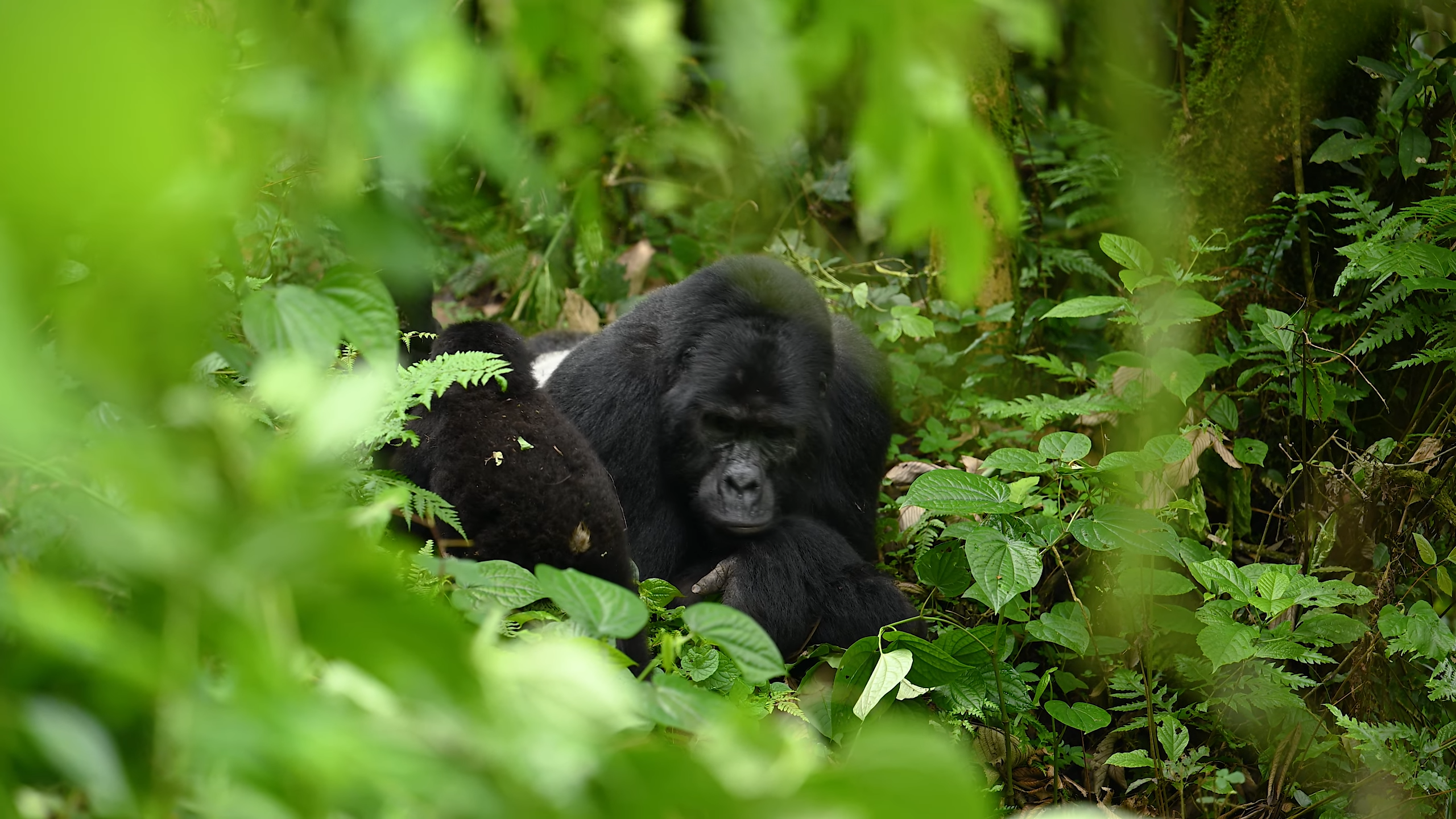
Bwindi Gorilla Trekking Safari Experiences
Chimpanzees and Golden Monkeys: Complementary Primate Encounters
While gorillas often steal the spotlight, no East African primate safari is complete without meeting their charismatic cousins, the chimpanzees and golden monkeys. Together, they round out a journey that combines raw wilderness, scientific wonder, and personal connection.
The Chimpanzee Encounter
Chimpanzees, our closest living relatives, offer one of the most thrilling wildlife interactions in Africa. In Uganda, the experience is unrivaled. The legendary Kibale National Park, known as the “Primate Capital of the World,” hosts the highest density of chimpanzees on the continent, around 1,500 individuals within its lush tropical forest. Trekkers are guided by expert trackers who interpret the forest’s signs, distant whoops, rustling canopy, and the sharp crack of fruit pods, until the first glimpse of a lively chimp family swings into view.
Other popular sites for chimpanzee trekking in Uganda include Budongo Forest, Kyambura Gorge, and Kalinzu Forest, each offering unique terrain and photographic diversity. For travelers embarking on gorilla and chimpanzee trekking from South Africa, combining these parks creates an unparalleled wildlife circuit, one that spans playful chimps, majestic gorillas, and Africa’s broader safari landscapes.
In Rwanda, the experience unfolds in Nyungwe Forest National Park, an ancient mountain rainforest renowned for its dramatic beauty and aerial canopy walks. Though the chimpanzee population here is smaller, estimated between 350 and 500 individuals, the forest itself is a biodiversity marvel. Nyungwe’s towering mahoganies, misty ridges, and endemic birds make it a worthy stop on any Rwanda gorilla trekking tour or African wildlife safari from South Africa.
Tanzania’s Hidden Gem: Mahale Mountains National Park
For travelers seeking something remote and soul-stirring, Mahale Mountains National Park in western Tanzania offers one of the most intimate chimpanzee tracking experiences on the continent. Accessible only by boat or air, Mahale’s forested slopes rise dramatically from the turquoise shores of Lake Tanganyika, creating one of Africa’s most pristine natural environments.
Here, you’ll find one of the largest and most studied wild chimpanzee communities in the world, the M Group, habituated for decades by Japanese researchers. Trekking through Mahale feels like stepping into a living Eden; no crowds, no roads, just the sounds of birds, cicadas, and chimpanzees echoing through the jungle. Unlike the structured tracking systems of Uganda and Rwanda, Mahale’s experience feels raw and unfiltered, ideal for seasoned explorers, photographers, and travelers seeking the kind of authenticity that defines true East Africa primate safaris.
Golden Monkeys: East Africa’s Hidden Gems
For those drawn to rare and photogenic species, golden monkey tracking offers a colorful twist to the primate adventure. Found only in the Virunga Mountains, these lively, golden-furred primates thrive in the bamboo forests of Volcanoes National Park (Rwanda) and Mgahinga Gorilla National Park (Uganda). Their playful nature, fast movements, and sociable behavior make every encounter a joy to witness, a lighter, more playful contrast to the intensity of gorilla trekking.
Adding golden monkey tracking to your primate tracking from South Africa itinerary enriches the experience with ecological variety and visual delight. It’s an ideal add-on for photographers, families, or travelers seeking to witness the full spectrum of East Africa’s primate diversity in a single trip.
Whether your journey takes you to Kibale’s whispering forests or Nyungwe’s canopy-covered trails, every encounter deepens your connection to Africa’s living heritage. Primate tracking from South Africa offers the rare privilege of walking among species that define humanity’s evolutionary story, a reminder that protecting them protects a part of ourselves.
Strategic Destination Comparison: Rwanda vs. Uganda
Choosing between Uganda and Rwanda is one of the most common questions travelers ask when planning primate tracking from South Africa. Both destinations offer unforgettable encounters with mountain gorillas and chimpanzees, yet they differ in style, logistics, cost, and trekking experience. Understanding these nuances helps you tailor your East Africa primate safari perfectly to your travel style.
For most travelers embarking on primate tracking from South Africa, Uganda offers the richer and more holistic safari circuit, especially for those combining it with the Big Five experiences in Queen Elizabeth or Murchison Falls National Parks.
| 🇷🇼 Rwanda: The Luxury Gateway | 🇺🇬 Uganda: The Comprehensive Safari Choice |
|---|---|
| For travelers seeking a short, high-comfort primate adventure, Rwanda is the most efficient choice. Volcanoes National Park lies just a 2–3-hour drive from Kigali International Airport (KGL), making it ideal for travelers on a limited time or connecting from South Africa, Europe, or the USA. The terrain is generally less demanding than Uganda’s, with many habituated gorilla families found near the trailheads.
However, Rwanda’s convenience comes at a premium. The gorilla trekking permit for non-residents costs USD 1,500, though South African citizens benefit from the Rest of Africa (ROA) rate of USD 500 during off-peak months. Luxury lodges such as Bisate, Sabyinyo, and Singita Kwitonda offer world-class comfort, seamless logistics, and sustainable operations that directly support local conservation For many international visitors, Rwanda’s efficiency and refinement make it the perfect gateway for primate tracking from South Africa, blending soft adventure with world-class comfort. |
For travelers who prefer depth and diversity, Uganda is the ideal choice. Though it requires a longer journey, approximately a 9-hour drive from Entebbe (EBB) to Bwindi Impenetrable National Park, or a 1.5-hour internal flight to Kihihi or Kisoro airstrips, the rewards are unmatched. Uganda combines gorilla trekking in Bwindi or Mgahinga with chimpanzee trekking in Kibale Forest National Park, making it the most complete destination for East African primate safaris. The rugged terrain and dense rainforest add a sense of adventure, while the affordability of permits (USD 800 FNR / USD 500 ROA) makes Uganda highly attractive for extended itineraries. For most travelers planning primate tracking from South Africa, Uganda offers a deeper, more holistic experience that combines wildlife variety, cultural immersion, and the thrill of untamed wilderness. |
Seamless Travel from South Africa: Logistics and Entry Requirements
Planning a primate tracking from South Africa is far easier than most travelers expect. With direct flights, straightforward visa procedures, and well-established tourism infrastructure, East Africa is both accessible and rewarding.
Planning primate tracking from South Africa is surprisingly seamless, thanks to direct flights, easy visa access, and efficient logistics. Travelers from Johannesburg (JNB) can fly directly to Kigali (Rwanda) or Entebbe (Uganda) in under four hours, connecting effortlessly to gorilla and chimpanzee destinations. South African citizens enjoy visa-free entry to Rwanda, simple eVisa processing for Uganda, and access to the East Africa Tourist Visa (USD 100) for multi-country travel. A Yellow Fever certificate and malaria precautions are recommended, while our team handles all arrangements, from airport transfers to border crossings. For international guests from Europe, the USA, Asia, or Australia, routing via Johannesburg offers a convenient gateway to East Africa, ideal for combining South Africa’s Cape Town or Kruger with Uganda or Rwanda’s primate forests for a true Cape-to-Jungle safari.
Crafting the Ultimate Great Ape Itinerary
Designing the perfect primate tracking itinerary from South Africa depends on how much time you have and what you want to experience: quick immersion or a full-scale wildlife adventure.
What to Expect in the Wild On The Trekking Experience
Every moment of primate tracking from South Africa into Uganda or Rwanda’s forests feels like a passage into another world. The hum of insects, the mist clinging to ancient trees, and the rhythmic footsteps of your guide all lead to one unforgettable moment, the first sight of a gorilla family in the wild.
Gorilla and chimpanzee trekking is a rewarding yet moderate adventure that demands patience and preparation rather than speed. Hikes can last from 30 minutes to six hours through lush, often steep rainforest terrain, especially in Uganda’s Bwindi Impenetrable Forest, known for its challenging trails, while Rwanda’s Volcanoes National Park offers generally gentler slopes and shorter hikes. Each trek is guided by expert rangers under strict conservation protocols: only eight visitors per gorilla or chimp family daily, one-hour viewing limits, and a minimum trekking age of 15 years to ensure safety and sustainability. For seniors or those with limited mobility, both countries provide porters and sedan chair services, allowing anyone to experience the magic of East Africa primate safaris while supporting local communities. Travelers should pack sturdy waterproof boots, gloves, gaiters, long-sleeved neutral clothing, insect repellent, and a rain jacket, along with essentials like a refillable water bottle, snacks, and camera gear. With proper gear, respect for the environment, and an adventurous spirit, primate tracking from South Africa transforms from a simple safari into an unforgettable, soul-stirring encounter with nature’s most intelligent beings.
Comprehensive Cost Analysis: Permits, Packages, and Conservation
The cost of gorilla and chimpanzee trekking may seem high, but every dollar tells a conservation story. Permit fees directly fund anti-poaching patrols, veterinary care, and community development, ensuring the long-term survival of these rare primates.
Gorilla & Chimpanzee Trekking Permit Costs for South Africans
Below is a comparison of the current primate tracking permit prices in Uganda and Rwanda. South African citizens enjoy discounted Rest of Africa (ROA) rates, making primate tracking from South Africa one of the most affordable ways to experience East Africa’s great apes.
| Permit Type | Foreign Non-Resident (FNR) | South African Citizen (ROA) |
|---|---|---|
| Gorilla Trekking: Uganda | USD 800 | USD 500 |
| Gorilla Trekking: Rwanda | USD 1,500 | USD 500 (low season promo) |
| Chimpanzee Trekking: Uganda | USD 250 | USD 200 |
Note: Rwanda’s USD 500 promotional permit rate for African citizens is only valid in the low and shoulder seasons (March–May and November–February). Booking during these months offers significant savings for South African travelers planning a primate tracking safari from South Africa. These savings make primate tracking from South Africa especially rewarding. For international travelers from Europe, the USA, and Asia, the higher permit costs are offset by the unique privilege of supporting one of conservation’s greatest success stories.
East Africa Primate Tracking Itineraries from South Africa
Short Primate Safaris (3–5 Days)
Perfect for travelers with tight schedules or those adding a primate tracking extension after a Southern Africa safari.
- Rwanda: The most time-efficient option. Arrive in Kigali, drive to Volcanoes National Park, trek gorillas, and return within three days.
- Uganda: Opt for a 3-day fly-in safari to Bwindi, avoiding long drives. Prices range from USD 1,800–4,500, depending on lodge level.
These quick trips suit travelers from South Africa, Europe, and Asia who want an unforgettable wildlife experience without extended travel.
The Full East Africa Primate & Wildlife Combo (10–14 Days)
For those craving depth, a 10–14-day Uganda safari is the gold standard. A typical itinerary includes:
- Ziwa Rhino Sanctuary: Track rhinos on foot.
- Murchison Falls National Park: Game drives and a Nile River cruise.
- Kibale Forest: World-famous chimpanzee trekking and primate habituation.
- Queen Elizabeth National Park: Tree-climbing lions and Kazinga Channel cruise.
- Bwindi Impenetrable National Park: The grand finale, gorilla trekking and cultural village visits.
This is the ultimate choice for travelers seeking a complete primate tracking experience from South Africa experience blended with classic Big Five game viewing.
Cross-Border Luxury Circuits
For luxury travelers from the USA, Europe, or Australia, we design exclusive cross-border primate safaris that combine both Uganda and Rwanda.
One popular route begins in Kigali (Rwanda), then crosses into Uganda’s Bwindi for gorilla trekking, maximizing efficiency and minimizing travel time. Alternatively, a Rwanda circuit can include:
- Akagera National Park: Big Five safari and scenic plains.
- Nyungwe Forest: Chimp tracking and canopy walks.
- Volcanoes National Park: Iconic gorilla trekking and golden monkey tracking.
Each itinerary can be tailor-made to your pace, interests, and comfort level. Whether you prefer private lodges, guided group tours, or luxury fly-in safaris, Mtembezi ensures your primate tracking from South Africa is seamless, responsible, and unforgettable.
FAQs for South African and International Travelers
Do South Africans qualify for discounted gorilla permits?
Yes. South African passport holders pay USD 500 instead of USD 1,500 in Rwanda (low season) and USD 800 in Uganda, an exclusive Rest of Africa rate.
When is the best time for primate tracking from South Africa?
The dry seasons (June–September and December–February) offer the most comfortable trekking conditions. The rainy seasons (March–May, October–November) feature lush scenery and discounted rates.
Can I combine gorilla trekking with a safari?
Absolutely. Many travelers combine chimpanzee trekking in Kibale or gorilla trekking in Bwindi with Big Five safaris in Queen Elizabeth National Park, or even fly to Kenya’s Masai Mara or Tanzania’s Serengeti.
What level of fitness is required?
Moderate fitness is sufficient. Treks can last 2–6 hours and involve uneven terrain. Porters and sedan chairs are available for added support.
What’s the minimum age for trekking?
Travelers must be 15 years or older to join gorilla or chimpanzee treks in Uganda and Rwanda.
Is primate trekking safe?
Yes. All treks are led by armed, trained rangers. Gorilla and chimpanzee encounters are strictly controlled and safe when park guidelines are followed.
Start Your East Africa Primate Adventure from South Africa Right Away
Few journeys compare to standing eye-to-eye with a mountain gorilla or listening to the calls of chimpanzees deep in the rainforest. Whether you’re starting from South Africa, Europe, the USA, or Asia, Mtembezi ensures every aspect of your primate tracking from South Africa is seamless, responsible, and unforgettable. Let our safari specialists design your custom itinerary, blending gorilla trekking, chimpanzee tracking, golden monkey encounters, and classic Big Five safaris for a once-in-a-lifetime African experience.