
Masai Mara Self-Drive: First Impressions & Sense of Place
A self-drive safari in Kenya begins long before the first lion sighting. The journey into the Masai Mara is a full-day commitment, typically around six hours from Nairobi, passing through forested highlands, small towns, and open countryside that gradually signals a shift away from urban Kenya. That transition matters. It mentally prepares travelers for slower movement, fewer certainties, and a landscape that dictates the pace rather than the clock.
One of the first surprises for many visitors is the climate. Early mornings in the Mara can be sharply cold, especially in open vehicles before sunrise. Temperatures can drop into the low teens, and the chill is amplified by wind and elevation. This contrast, cold dawns giving way to bright, expansive days, adds texture to the experience but also requires practical preparation that first-time self-drivers often underestimate.
Accommodation inside or near the Mara Triangle reinforces the sense of being fully immersed. Camps are typically unfenced, which is not a design choice but a philosophy of coexistence. Wildlife moves freely, and the boundary between “camp” and “reserve” is intentionally blurred. The reward is a constant awareness that you are inside a living ecosystem, not visiting it from the outside.
What stands out most in these early hours is not yet the wildlife itself, but the scale. The Mara’s openness is overwhelming at first, with wide horizons, scattered acacia trees, and grasslands that seem to stretch indefinitely. It creates a feeling of exposure that is both humbling and exhilarating, especially for travelers driving themselves for the first time.
Wildlife Reality & the Emotional Rhythm of a Self-Drive Day
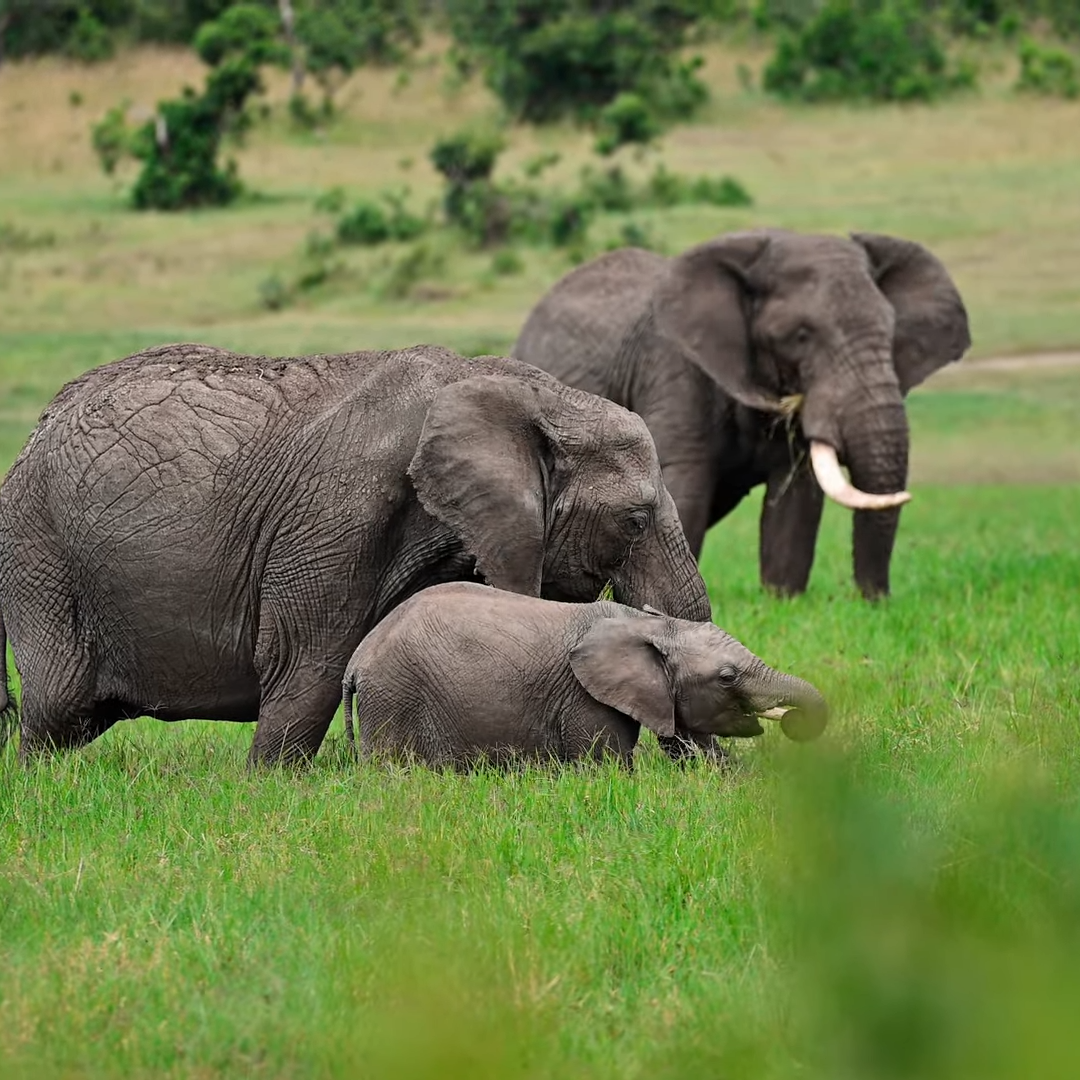
Wildlife encounters in the Masai Mara are rarely linear or predictable, and a self-drive safari amplifies that uncertainty. Sightings can unfold rapidly, an elephant crossing close to the track, a herd of buffalo appearing over a rise, or a lion materializing with little warning. These moments are intense precisely because they are unscripted and require immediate judgment from the driver.
Self-drive does not mean isolation. Radio communication, coordination with a lead vehicle or guide, and adherence to basic etiquette are essential. Staying close as a convoy, switching off engines at sightings, and moving together are not formalities; they directly affect animal behavior and the quality of the encounter. Distance, noise, and positioning all matter, and mistakes are quickly felt.
Predator sightings often arrive unexpectedly and stack emotionally: Seeing a lion up close can feel like the peak of the day, only to be eclipsed by a leopard guarding a kill in a tree moments later. These experiences compress time. Hours of slow driving can be forgotten instantly when the Mara delivers one of its raw, unfiltered scenes of survival.
Weather adds another layer of realism: Conditions can shift suddenly from sun to rain, turning firm tracks into slick mud. Getting stuck is not uncommon, even for capable vehicles, and recovery becomes part of the story rather than a failure. In those moments, the self-drive experience reveals its true nature: part wildlife safari, part problem-solving exercise, and entirely dependent on patience and composure.
By the end of the day, what lingers is not just the checklist of animals seen, but the emotional weight of navigating such a powerful landscape independently. The Masai Mara rewards self-drivers generously, but it demands respect, adaptability, and a willingness to surrender control.
| Aspect | Main Masai Mara Reserve | Mara Triangle |
|---|---|---|
| Management Style | County-managed, busier entry points | Privately managed, stricter regulation |
| Traffic Levels | Higher vehicle density, especially at sightings | Noticeably fewer vehicles |
| Road Conditions | Mixed tracks can deteriorate quickly after rain | Generally better maintained but still weather-dependent |
| Navigation Clarity | Limited signage, many intersecting tracks | Slightly clearer layout, fewer confusing loops |
| Wildlife Pressure | Excellent sightings, but crowded around predators | Fewer vehicles allow more natural behavior |
| Self-Drive Difficulty | Moderate, requires constant situational awareness | Moderate but calmer and more controlled |
| Best For | First-time visitors want the density of sightings | Travelers seeking space and better self-drive flow |
Mtembezi African Safaris insight: For self-drivers, the Mara Triangle often feels less overwhelming and more intuitive, especially during peak seasons when vehicle pressure in the main reserve can affect navigation and sighting quality.
Weather Volatility, Photography Conditions & Sighting Expectations
Weather in the Masai Mara is one of the least predictable elements of a self-drive safari, and it directly influences both driving conditions and photographic outcomes. Early mornings are often cold and misty, particularly in open plains near rivers and low-lying areas. Fog can flatten light, turning sunrise into a soft glow rather than a dramatic event, and this is a normal, not disappointing, part of the Mara experience.
As the day progresses, conditions can shift rapidly: Sunshine may give way to sudden rain showers, even outside the peak rainy months. These short bursts of rain are enough to transform dust tracks into slick mud, increasing the likelihood of wheel spin or temporary immobilization. For self-drivers, this volatility demands flexibility rather than rigid plans.
From a photography perspective, the Mara rewards patience: Overcast skies soften contrast and are ideal for wildlife portraits, while dramatic cloud build-ups often precede excellent light just after rain. However, fast-changing conditions mean gear protection is essential. Cameras should be ready to be packed away quickly, and vehicles should be positioned with exit routes in mind if the weather worsens.
Sighting expectations should be realistic: While the Masai Mara is one of Africa’s richest ecosystems, wildlife encounters are not evenly distributed throughout the day. Long stretches of driving without sightings are common and should be expected. These quieter periods are part of the rhythm, often punctuated by intense, unforgettable moments when predators appear unexpectedly.
Perhaps most importantly, self-drive travelers should understand that the Mara does not operate on guarantees. Migration herds may arrive earlier than expected or shift location overnight. Predators may be active for minutes and then disappear entirely. The reward of a self-drive safari lies not in controlling these outcomes, but in being present, observant, and ready when the Mara chooses to reveal itself.
Predator behavior during the Migration also fluctuates. Lions, hyenas, and crocodiles respond dynamically to herd density, often shifting territories or becoming temporarily elusive after intense feeding periods. This explains why activity may feel sudden and then vanish without warning.
Seasonality explained through real driving conditions, not headlines
The Masai Mara is accessible throughout the year, but self-drive conditions vary dramatically depending on the season. The most important factor is not wildlife presence, which remains consistently strong, but how the
roads behave under changing weather patterns.
The dry season, typically from July to October, is the most forgiving for self-drivers. Tracks are firmer, navigation is clearer, and water crossings are predictable. Wildlife concentrates around rivers and permanent
water sources, increasing sighting frequency. However, this period also brings high vehicle density, especially
around predators, which can reduce flexibility for independent drivers.
The short rains of November and early December introduce greener landscapes and fewer vehicles. Roads generally remain passable, though isolated muddy sections appear after storms. This period suits confident self-drivers who are comfortable adjusting routes daily and reading ground conditions as they go.
The long rains, usually from March to May, present the most challenging environment. Black cotton soil becomes extremely slippery, and even light rainfall can render tracks impassable. While the Mara is visually dramatic during this time, self-drive safaris require advanced skill, recovery equipment, and conservative decision-making.
January, February, and early June often provide the best balance. Traffic is lighter, roads are manageable, and
the landscape feels open. These months reward travelers who value driving flow, space, and quieter encounters over peak-season spectacle.
Ultimately, the best time for a self-drive Masai Mara safari depends on comfort with uncertainty. Those willing to adapt to changing conditions are often rewarded with a more personal and immersive experience.
Vehicles, radios, convoy logic, and the recovery mindset
Self-drive safaris in Kenya are defined as much by preparation as by wildlife. Vehicle choice is foundational.
A high-clearance 4×4 with low-range gearing is essential. Tire condition, correct pressures, and suspension
health matter as much as engine performance, particularly on long game-drive days.
Communication is another critical layer: Radios are not accessories; they are safety tools. Whether driving in
a supported convoy or a small group, radios allow coordination at sightings, early warnings about hazards, and calm decision-making when conditions change. They also help maintain appropriate spacing between vehicles.
Convoy driving requires discipline: Staying within visual range matters, but so does leaving enough distance to
react independently. At sightings, coordinated stopping and engine shutdowns reduce animal disturbance and
prevent congestion. When one vehicle encounters difficulty, others should be positioned to assist rather than
observe.
Recovery is an expected part of self-drive travel, not a failure: Mud, sand, and sudden rain regularly test
traction. Recovery boards, tow straps, a shovel, and basic mechanical understanding are essential. More important than equipment is mindset: patience, communication, and avoiding rushed decisions prevent small problems from becoming serious ones.
Knowing when to turn back is a critical skill: The Mara does not reward stubbornness. Choosing safer routes,
waiting for conditions to improve, or abandoning a planned loop reflects good bush judgment, not inexperience.
A well-planned self-drive safari balances confidence with restraint, allowing the landscape to dictate the pace
rather than forcing progress.
How Mtembezi African Safaris Designs Safe, Informed Self-Drive Journeys in Kenya
At Mtembezi African Safaris, self-drive itineraries are designed around real conditions, not ideal scenarios. Our planning process begins with route analysis based on season, recent rainfall patterns, and the travelers’ driving experience. We do not rely on generic maps or static assumptions.
Vehicle selection and preparation are matched to the terrain and timing of travel. Clients receive guidance on tire pressures, fuel planning, recovery equipment, and daily driving limits. Where appropriate, we recommend convoy-supported self-drive models that strike a balance between independence and professional oversight.
Navigation support is practical and experience-based. We emphasize understanding zones, landmark recognition, and decision-making in the field, rather than relying solely on GPS tracks. Clients are briefed on high-risk areas, common mistakes, and realistic daily mileage expectations inside the Mara.
Most importantly, our approach respects the emotional and physical demands of self-drive safaris. We design itineraries that allow room for rest, weather delays, and unplanned wildlife moments. The goal is not to cover ground aggressively, but to move through the landscape with confidence and awareness.
A self-drive safari in the Masai Mara is not about proving capability; it is about earning access to one of Africa’s most powerful ecosystems on its own terms. That is the experience Mtembezi African Safaris curates with care and responsibility.