
Authentic Namibia Cultural Tours & Tribal Encounters
Namibia Cultural Tours with Mtembezi African Safaris offer a journey through a landscape as expansive and resilient as the country’s deserts themselves. Beyond the sculpted dunes of the Namib and the open wildlife plains of Etosha lies a human story shaped by endurance, adaptation, and an intimate relationship with land. For centuries, communities have learned not only how to survive in arid and semi-arid environments but also how to build meaning, identity, and continuity within them.
A cultural tour in Namibia is therefore not a staged experience or a performance arranged for visitors. It is an encounter with living heritage, traditions that are practiced, questioned, and carried forward in daily life. In many regions, cultural identity is inseparable from cattle, water sources, seasonal movement, ancestral memory, and oral history. These are not remnants of the past but active systems of knowledge responding to modern realities.
At Mtembezi African Safaris & Vacations, cultural travel in Namibia is approached with care and intention. We work from the understanding that culture cannot be rushed, simplified, or extracted from its context. Our journeys are designed for travelers who seek depth rather than spectacle, those who value listening as much as observing and who recognize that meaningful tribal encounters emerge from respect, patience, and informed guidance.
Cultural Context: Namibia’s Human Mosaic
Namibia is home to a rich mosaic of communities whose histories long predate colonial borders and modern tourism routes. From the semi-nomadic pastoral societies of the north to the hunter-gatherer traditions rooted in the Kalahari, each group reflects a distinct response to environment, history, and social change.
These communities are not isolated from one another, nor frozen in time. Trade, migration, intermarriage, and shared landscapes have shaped overlapping identities across regions. Understanding Namibia’s culture, therefore, requires moving beyond labels and learning how people live today and how traditions are maintained, adapted, or reinterpreted in a rapidly changing
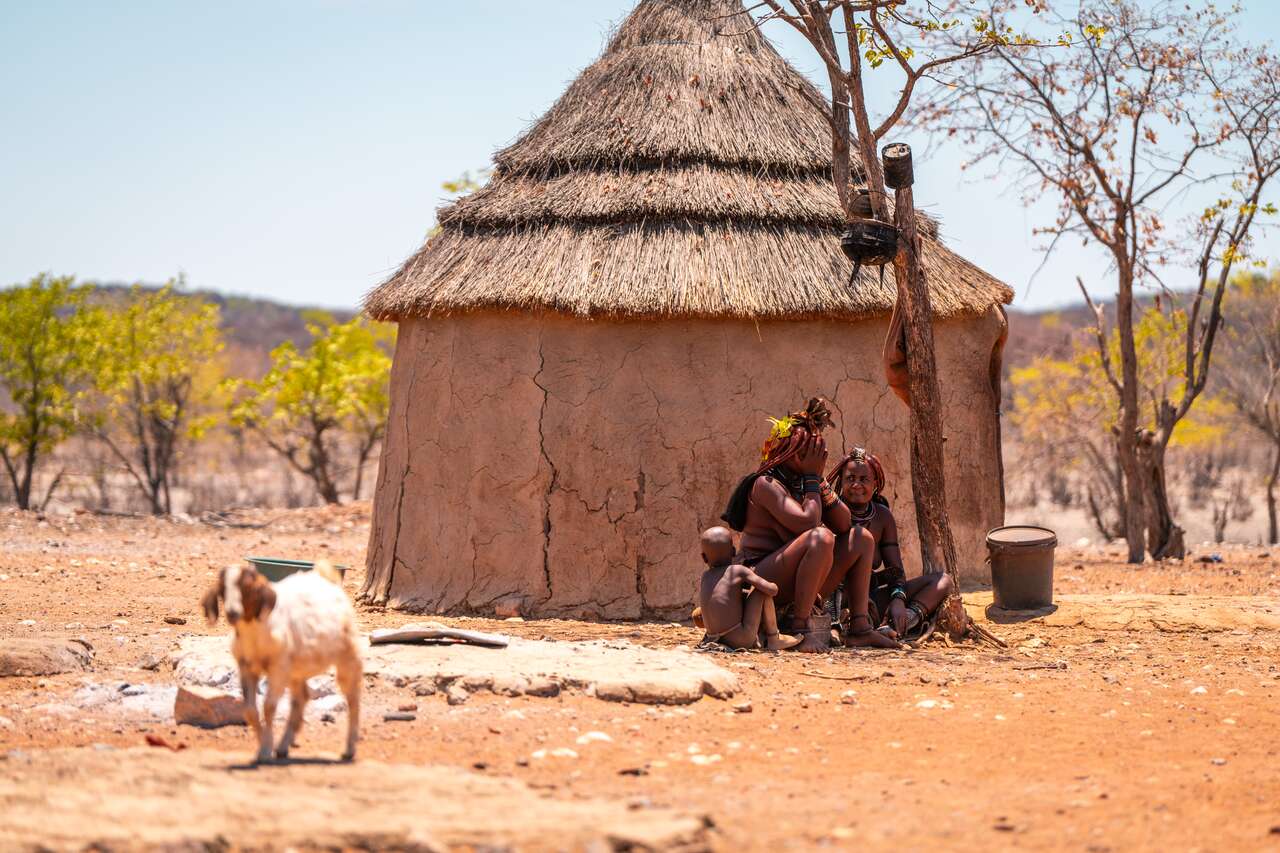
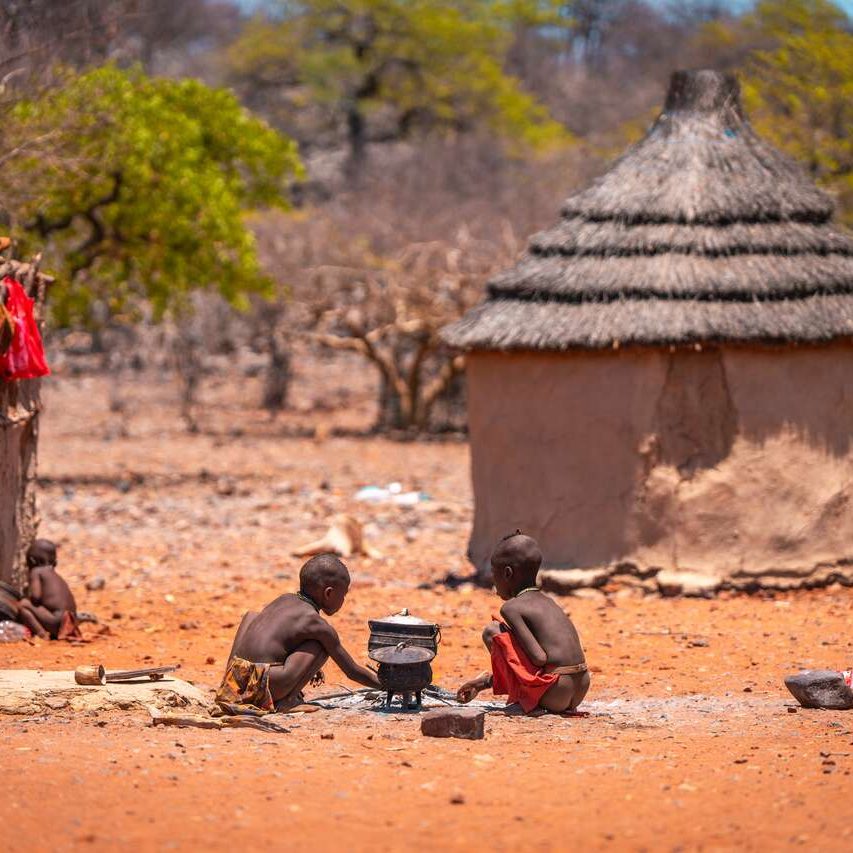
Traditional Himba huts and village life in northern Namibia offer travelers insight into indigenous housing and community traditions.
The WILDEST Food in Africa’s Emptiest Country!!! (FULL DOCUMENTARY)
For this reason, our Namibia cultural tours are deliberately integrated with the country’s natural landscapes. Village visits are connected to river systems, grazing lands, deserts, and wildlife areas, allowing travelers to see how the environment influences belief systems, livelihoods, and social structures. Culture is experienced as part of place, not as an isolated attraction, but as an essential layer of Namibia’s geography and history.
Experience the soul of the desert with our authentic Namibia Cultural Tours and immersive Tribal Encounters. Namibia’s cultural landscape is as expansive and resilient as the dunes themselves, offering a human story shaped by endurance, adaptation, and an intimate relationship with the land. Beyond the wildlife plains of Etosha, Mtembezi African Safaris & Vacations invites you to discover a living heritage. For centuries, communities like the Himba, San, and Damara have built identity and continuity within these arid environments. A cultural tour in Namibia with us is not a staged performance; it is a genuine encounter with traditions that are practiced and carried forward in daily life.
We approach cultural travel with care and intention, understanding that heritage cannot be rushed or simplified. Our journeys are designed for travelers seeking depth, those who value listening as much as observing, and who recognize that the most meaningful encounters emerge from respect, patience, and informed local guidance.
Central Namibia & Windhoek: Cultural Orientation & Context
Windhoek as a cultural starting point
Windhoek provides an essential cultural orientation for any journey through Namibia. More than a capital city, it is a meeting point of histories, pre-colonial, colonial, and post-independence, visible in its architecture, languages, religious life, and social rhythms. Cultural walks and guided discussions introduce travelers to Namibia’s modern identity while grounding the journey in historical context.
Township visits, markets, museums, and everyday community spaces offer insight into how tradition and modern life intersect, preparing travelers to understand better rural and remote cultural environments encountered later in the journey.
Mtembezi recommendation & ideal tour concept
- Guided Windhoek cultural walk with historical and social interpretation
- Introductory briefing on Namibia’s ethnic landscape and regional diversity
- Short township experience focused on daily life, not spectacle
Ideal tour fit: Day 1 cultural orientation for longer Namibia safaris; excellent for first-time visitors and senior travelers seeking context before remote travel.
Herero & Damara Communities of Central Namibia
Herero cultural identity and historical memory
The Herero people of central Namibia are known for their strong pastoral identity and visible cultural symbolism, particularly in dress and ceremonial life. Cattle remain central not only to livelihood but to social status, inheritance, and ancestral connection. Cultural encounters focus on understanding meaning, why traditions exist, and how they have been preserved through historical disruption.
Discussions often include themes of migration, resilience, and remembrance, offering travelers insight into how cultural identity endures beyond material expression.
Damara traditions and everyday rural life
The Damara people are among Namibia’s oldest communities, with cultural knowledge passed primarily through oral tradition, music, and shared daily practices. Cultural visits emphasize storytelling, traditional rhythms, and communal living rather than ceremony, offering a quieter but deeply grounded cultural experience.
These encounters reveal how culture is sustained through routine, work, family structures, and shared memory, rather than formal performance.
Mtembezi recommendation & ideal tour concepts
- Small-group village visits guided by community hosts
- Storytelling and cultural discussion sessions with elders or local educators
- Observation of pastoral routines and homestead life
Ideal tour fit: Central Namibia cultural extension combined with Etosha or Damaraland routes; well-suited for culturally curious travelers and photographers seeking contextual depth.
Damaraland & Kunene Region: Culture in Remote Landscapes
Where landscape dictates culture
As travelers move northwest from central Namibia into Damaraland and onward toward the Kunene Region, the landscape becomes more austere, distances widen, and settlements grow sparse. This is a region defined by rock, gravel plains, ephemeral rivers, and long periods without rain. Cultural life here has evolved in direct response to environmental constraints.
In these remote areas, survival has never been abstract. Knowledge of water, grazing, seasonal movement, and social cooperation is essential, and cultural traditions remain closely tied to these realities. Encounters in Damaraland and Kunene, therefore, require patience, humility, and an understanding that access is a privilege, not an entitlement.
The Himba Communities of Kunene
Social structure, belief, and identity
The Himba are semi-nomadic pastoralists whose social and spiritual life is deeply connected to cattle, ancestry, and land. Extended families live in homesteads that reflect social hierarchy, belief systems, and responsibility rather than permanence. Movement follows grazing and water availability, reinforcing a worldview shaped by adaptation rather than accumulation.
Central to the Himba belief is the ongoing relationship with ancestors, maintained through ritual spaces and daily observance. These practices are not ceremonial displays, but part of an active spiritual framework that guides decision-making, conflict resolution, and community cohesion.
Dress, symbolism, and environmental adaptation
Himba identity is often visually recognized through hairstyle, adornment, and the use of ochre-based mixtures applied to skin and hair. These elements are symbolic, social, and practical, signifying age, marital status, and belonging, while also offering protection from sun and dust in a harsh climate.
Understanding these practices requires context. They are expressions of continuity and self-definition, not curiosities, and they continue to hold meaning despite increasing exposure to modern influences.
Cultural engagement and respectful boundaries
Cultural visits with Himba communities must be conducted with exceptional care. Not all homesteads receive visitors, and those that do participate through community-approved arrangements. Engagement focuses on conversation, observation, and guided explanation rather than intrusion into private life.
Photography, movement within homesteads, and interaction with individuals are always guided by local protocol. Respecting boundaries is essential to maintaining trust and cultural integrity.
Mtembezi recommendation & ideal tour concepts
- Guided Himba village visit led by community-approved cultural hosts
- Extended conversations focusing on daily life, belief systems, and pastoral practices
- Low-impact visits integrated with Damaraland or Kunene scenic exploration
Ideal tour fit: Remote northern Namibia safaris; slow-travel itineraries; culturally focused journeys combined with desert landscapes and conservation areas. Best suited for travelers seeking depth, not volume.
The Kalahari: Cultural Memory in an Ancient Landscape
An environment that shaped humanity
Stretching across eastern and southern Namibia, the Kalahari is not a desert in the conventional sense, but a vast semi-arid system of sand, grassland, and seasonal abundance. It is one of the world’s oldest inhabited landscapes, and its cultural significance lies not in monuments or settlements, but in memory, movement, and knowledge carried across generations.
For the communities that have lived here for tens of thousands of years, survival has depended on close observation, adaptability, and cooperation. Cultural encounters in the Kalahari, therefore, unfold slowly, shaped by storytelling, walking, and shared attention to the land.
The San (Bushmen) Communities of the Kalahari
Origins, continuity, and identity
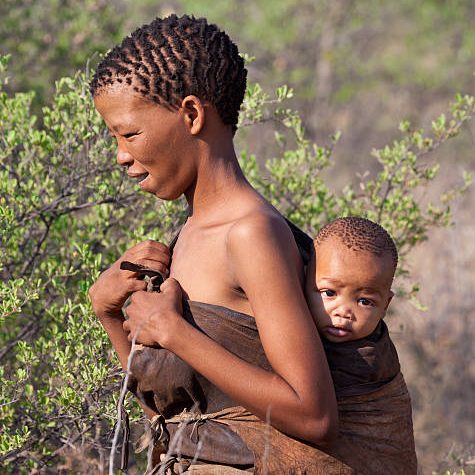
The San people are widely regarded as among the earliest inhabitants of southern Africa. Their cultural identity is rooted in mobility, egalitarian social structures, and an intimate relationship with the natural world. Rather than accumulation or permanence, San societies traditionally emphasized sharing, balance, and collective well-being.
Although many San communities today live within settled environments, cultural knowledge remains deeply embedded in language, oral history, and environmental literacy. Cultural visits focus on continuity rather than nostalgia, acknowledging both resilience and modern challenges.
Tracking, storytelling, and ecological intelligence
San ecological knowledge is among the most sophisticated in the world. Tracking is not merely a skill, but a language, reading soil, broken grass, insect movement, and animal behavior to understand what has passed through a landscape and when. These interpretations are shared through guided walks rather than demonstrations.
Storytelling plays an equally important role. Myths, songs, and narratives are used to transmit moral guidance, environmental understanding, and historical memory. For visitors, listening becomes as important as seeing.
Rock art and symbolic expression
Across Namibia, ancient rock art sites attributed to San ancestors offer insight into spiritual belief systems, hunting practices, and symbolic communication. These sites are approached as sacred cultural landscapes rather than tourist stops, and visits are conducted with explanation and restraint.
Interpretation focuses on meaning and worldview, not artistic technique alone, reinforcing the depth of San cosmology and connection to place.
Mtembezi recommendation & ideal tour concepts
- Guided San tracking walks led by trained community trackers
- Storytelling and discussion sessions focused on ecology and oral history
- Respectfully guided visits to rock art sites where appropriate
Ideal tour fit: Kalahari-focused cultural safaris; educational and slow-travel itineraries; excellent for photographers, conservation-minded travelers, and guests seeking intellectual depth alongside wilderness experiences.
Southern Namibia: Cultural Identity in a Harsh Frontier
A landscape of endurance and adaptation
Southern Namibia is defined by wide open spaces, extreme aridity, and a long history of pastoral movement. From the fringes of the Namib Desert to the rugged interior highlands, this region has shaped cultures built on resilience, seasonal migration, and deep social cohesion.
Cultural encounters here are grounded in oral history and lived experience rather than performance. The environment itself explains much of the worldview: survival depends on patience, foresight, and a strong sense of community.
The Nama People: Oral Tradition and Nomadic Roots
Historical identity and social structure
The Nama are part of the broader Khoekhoe cultural group and have historically practiced transhumant pastoralism, moving livestock in response to rainfall and grazing conditions. Social organization traditionally centered on extended family units, leadership by consensus, and strong kinship ties.
Unlike centralized kingdoms, Nama society evolved through flexibility and negotiation, traits that allowed communities to endure in one of southern Africa’s most demanding environments.
Language, music, and storytelling
Nama culture is strongly expressed through language and oral transmission. The Nama language, with its distinctive click consonants, remains a central marker of identity. Stories, praise poetry, and historical narratives are passed down verbally, often accompanied by song.
Music and dance are not staged performances but social expressions used during communal gatherings, rites of passage, and moments of collective reflection. Visitors are invited to observe and listen, with participation guided by context and consent.
Dress, craftsmanship, and symbolism
Traditional Nama attire, often seen during ceremonies and cultural gatherings, reflects both historical influence and symbolic meaning. Long dresses for women and distinctive head coverings reference modesty, status, and community belonging.
Craft traditions include leatherwork, beadwork, and practical household items designed for mobile lifestyles. These objects are valued for function first, with decoration reflecting personal and familial identity rather than ornamentation alone.
Mtembezi recommendation & ideal tour concepts
- Community-led cultural discussions focused on oral history
- Guided village visits emphasizing daily life and pastoral heritage
- Interpretive sessions on Nama language, music, and symbolism
Ideal tour fit: Southern Namibia extensions; culturally focused desert journeys; excellent for travelers interested in history, linguistics, and living traditions beyond wildlife safaris.

Urban & Coastal Cultural Experiences in Namibia
Cultural exploration in Namibia is not confined to remote villages or rural homesteads. The country’s towns and coastal centers reflect layered histories shaped by indigenous heritage, colonial influence, and post-independence transformation. Urban and coastal cultural experiences provide essential context for understanding how Namibia’s diverse communities navigate modern life while maintaining strong cultural identity.
Windhoek: Post-Independence Identity and Everyday Culture
As Namibia’s capital, Windhoek offers insight into the nation’s contemporary identity. Cultural exploration here focuses on lived experience rather than monuments alone; local markets, township neighborhoods, museums, and community spaces reveal the social fabric of a young nation shaped by resilience and adaptation.
Guided cultural visits emphasize dialogue and interpretation, addressing themes such as urban migration, social change, and the balance between tradition and modern aspiration. For travelers beginning their journey in Namibia, Windhoek provides an important cultural orientation before venturing into more remote regions.
Swakopmund & Walvis Bay: Coastal Heritage and Living History
Along the Atlantic coast, Swakopmund and Walvis Bay reveal another dimension of Namibia’s cultural narrative. German colonial architecture stands alongside modern Namibian commerce, fishing communities, and port infrastructure, illustrating how historical legacies continue to influence contemporary coastal life.
Cultural encounters in these towns explore maritime livelihoods, urban evolution, and the blending of European and African influences. These experiences are particularly valuable for understanding Namibia’s economic development and cultural diversity, offering a contrast to both rural traditions and wilderness-based safaris.
Integrating Culture with Safari & Landscape
Namibia’s cultural strength lies in the seamless connection between people, land, and wildlife. Cultural encounters are not isolated activities but are woven naturally into safari routes, allowing travelers to understand how communities have adapted to, and continue to coexist with, some of Africa’s most demanding environments.
Himba cultural experiences are paired with the remote landscapes of the Kunene Region, where pastoral traditions are inseparable from arid terrain. San encounters are closely linked to the ecology of the Kalahari, where tracking knowledge and survival skills are shaped by the environment itself. Across Etosha, Damaraland, and the Skeleton Coast, cultural routes are integrated into broader itineraries, providing human context alongside wildlife and scenery.
This approach creates a balanced journey, human, ecological, and experiential, ensuring culture is experienced as part of place rather than apart from it.
Responsible & Ethical Cultural Travel
All cultural tours with Mtembezi African Safaris & Vacations are grounded in respect, consent, and long-term community benefit. Cultural encounters are designed as meaningful exchanges rather than staged performances, with communities actively guiding how their stories and traditions are shared.
Community consent and participation form the foundation of every experience. Guests receive cultural sensitivity guidance in advance, and photography, gifting, and participation are always directed by local protocol. Fair compensation and transparent community contributions ensure that cultural tourism supports local initiatives while preserving dignity and authenticity.
Who Namibia Cultural Tours Are Best Suited For
Namibia Cultural Tours are ideal for travelers who value understanding over spectacle and depth over surface experiences. These journeys are particularly well-suited to culturally curious and well-informed travelers, photographers, and documentary-minded guests, and senior travelers seeking slower-paced, meaningful exploration.
They also appeal to safari travelers who want to go beyond wildlife viewing, those who wish to understand the human histories, knowledge systems, and lived realities that shape Namibia’s landscapes today.